The Home Gardens (Blog) is reader-supported. When you buy through links on this page, we may earn an affiliate commission at no additional cost to you.
Key Takeaways
- Boredom is a leading cause of destructive behaviour in dogs.
- Mental stimulation is just as important as physical exercise — sometimes more so.
- Simple household items can be repurposed into engaging puzzles and games.
- Focusing on instincts (sniffing, foraging, problem-solving) produces the best results.
- Budget-friendly DIY projects are often more rewarding than store-bought toys.
Dogs are intelligent, curious animals, and without adequate mental and physical stimulation, that restless energy finds an outlet; rarely a convenient one.
Keeping our dogs happy and engaged doesn’t have to cost a lot. In fact, some of the best enrichment tools can be made right at home using items you already have. I’ve put together a collection of easy, budget‑friendly DIY projects that tap into your dog’s instincts and help prevent boredom‑related behaviours.
Why Mental Stimulation Is Just as Important as Physical Exercise
We all know dogs need their daily walks, but mental exercise is equally vital. Research shows that cognitive challenges can reduce problem behaviours and improve a dog’s overall well‑being. A 2024 study by researchers at Aberystwyth University found that dogs trained in scent work showed improved mental ability and a greater capacity to perform cognitive tasks. Engaging in scent activities can increase optimism and build better focus compared to other activities, such as agility training.
In my experience with Luna and Taner, fifteen minutes of nose‑work or puzzle‑solving can leave a dog as tired and content as an hour of running around the park. That’s a big win for both of us.
How Enrichment Reduces Behavioural Problems
Excessive barking, destructive chewing, digging, and hyperactivity are rarely signs of a “bad” dog. More often, they’re symptoms of an under-stimulated one. A 2021 survey by the American Kennel Club found that dogs receiving regular cognitive enrichment exhibit measurable reductions in anxiety-related behaviours compared to those receiving physical exercise alone.
Consistent cognitive challenges give dogs a productive outlet for their energy. They build confidence, reinforce focus, and, perhaps most importantly, strengthen the bond between dog and owner. A dog that feels mentally satisfied is far more likely to be calm, responsive, and well-adjusted in its home environment.
Safety Guidelines for Homemade Dog Toys
Before we start crafting, it’s crucial to put safety at the top of the list. Homemade toys can be just as safe as store-bought ones only when the right materials are used and the right precautions are taken.
Choose Non‑Toxic, Durable Materials
Always check labels before using any household item in a toy or puzzle. Avoid materials that could be harmful if chewed or accidentally swallowed. Natural fibres like cotton and hemp are generally safer than synthetic plastics, and they hold up better under repeated use. If a toy shreds quickly, it creates both a mess and a potential hazard.
The ASPCA reminds us to always supervise our dogs when they are playing with DIY items, and to remove any toy immediately if our dogs try to ingest parts of it.
Identifying Potential Choking Hazards
Buttons, plastic eyes, small snaps, and loose threads can become dangerous choking hazards. The same goes for metal clips or any parts that could be chewed off and swallowed.
Supervision Best Practices for Interactive Play
Even a well-made toy requires your attention. Never leave a dog unsupervised with a new homemade item until you’re confident they understand how to interact with it safely. If your dog begins shredding a toy rather than engaging with it, remove it immediately. Your presence is the most important safety measure in any play session.
DIY Dog Enrichment Projects Using Household Recyclables
1. Cardboard Box Scent Games
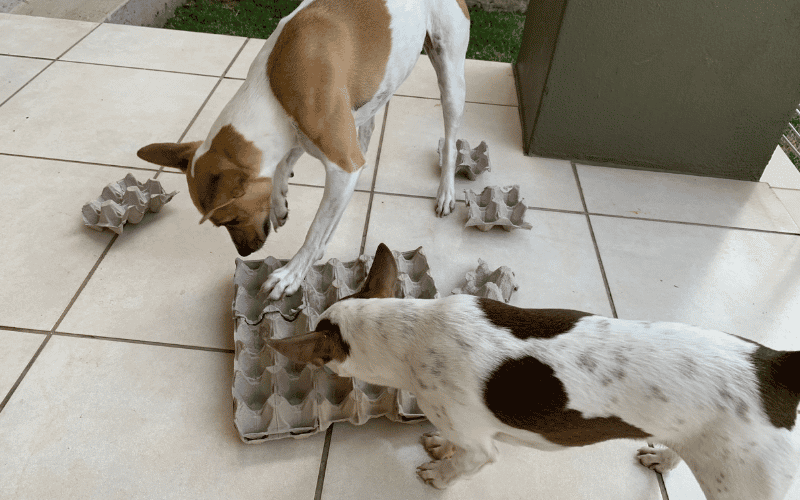
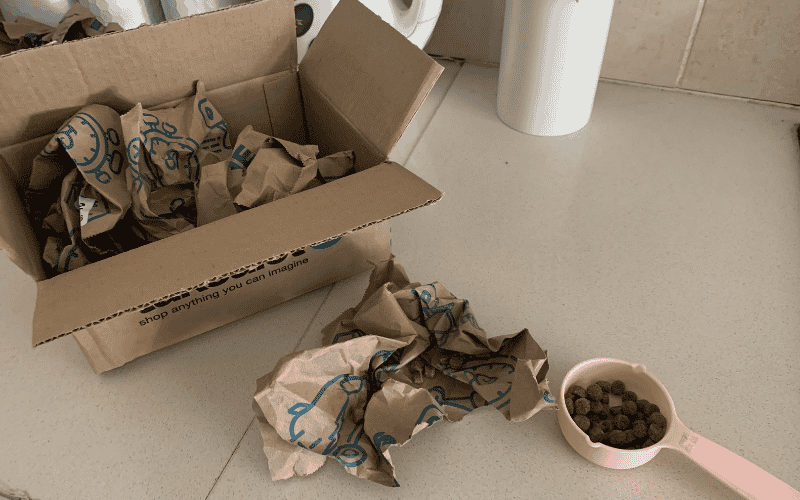
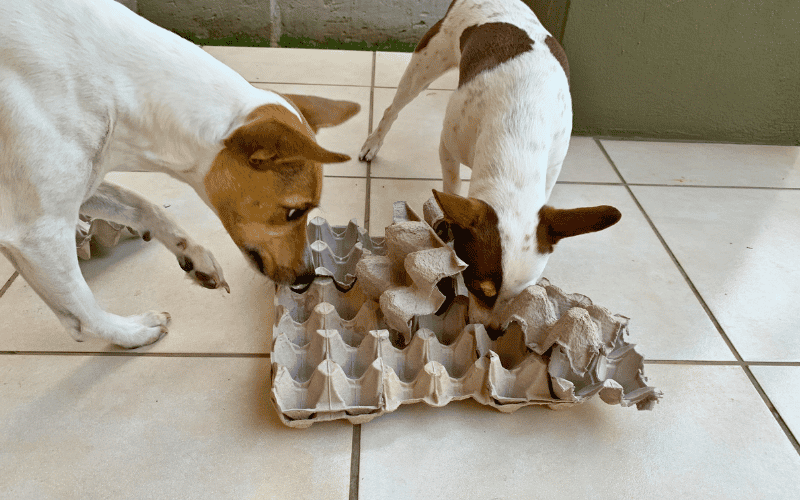
Grab a cardboard box, fill a box with crumpled paper, toss in a few treats or pieces of kibble, and let your dog sniff out the hidden goodies. For added complexity, set up multiple boxes and only hide treats in some of them. This simple game taps into their natural foraging instincts and can keep them busy for a good while.
2. Plastic Bottle Puzzle Feeders
An empty water or soda bottle (with the cap and plastic ring removed) can be turned into a puzzle feeder. Poke a few holes in the sides, fill it with kibble, and watch your dog roll and bat the bottle around to shake out the food. This not only provides mental work but also slows down rapid eaters.
3. Braided Tug Toys from Old T‑Shirts
Cut an old cotton t‑shirt into three long strips, braid them tightly, and knot the ends. You’ll have a soft, durable tug toy that’s easy to wash and great for a round of interactive play.
4. Treat-Dispensing Cardboard Tubes
Fold both ends of a toilet paper roll closed and hide a few small treats inside. Your dog has to figure out how to open it or tear through the cardboard to reach the reward. For dogs who solve it too quickly, tape the ends shut or slide one tube inside another for added difficulty. These take seconds to prepare and provide a satisfying, self-contained puzzle.
Interactive Scent Work Games You Can Build at Home
Snuffle Mat for Foraging
A snuffle mat is essentially a fabric “lawn” where you hide treats among strips of fleece or cotton. Snuffle mats respond to a dog’s natural urge to sniff and forage, and they are “great for keeping your dog’s mind entertained and mentally stimulated,” says veterinarian Dr. Kelly Hood. Building your own mat is simple: take a rubber sink mat or a piece of cardboard with holes, tie fabric strips through it, and sprinkle kibble deep in the “grass.”
The activity slows down fast eaters, reduces meal-related anxiety, and provides 10–20 minutes of focused engagement. They’re also machine washable, making them easy to maintain.
Indoor Scent Trail
On a rainy or low-energy day, set up a scent trail by dabbing a tiny bit of low‑sodium broth or a safe essential oil (like lavender, which has been shown to have a calming effect) on a cotton ball. Drag the cotton ball along the floor to create a path, hiding a few treats at the end. Your dog will follow their nose with great enthusiasm.
Gradually increase the complexity by hiding treats in harder-to-find spots. The entire activity takes minutes to set up and can keep a dog occupied for much longer.
Muffin Tin Nose Work Puzzle
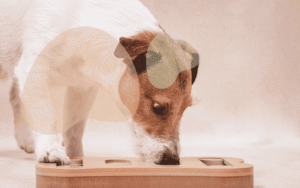
A standard muffin tin becomes a great puzzle when you place a treat in each cup and cover the cups with tennis balls. Your dog has to use their nose or paw to remove the balls and uncover the reward. It becomes an interesting sight if tennis balls are a high-value toy for your dog, like my Luna.
Enrichment for High‑Energy Dogs
High-drive dogs, working breeds, herding dogs, terriers, and sporting breeds often need more than a daily walk to stay balanced. Channeling that energy productively isn’t just good for them; it makes life considerably more peaceful for everyone in the household.
Backyard Agility Course with PVC Pipes
A few lengths of PVC pipe and some connectors are all you need to build low jumps or weave poles. You don’t have to be a carpenter; just keep the design simple and adjust the difficulty as your dog gains confidence.
As your dog gains confidence, add a tunnel made from a collapsible laundry hamper or a basic A-frame using scrap wood and plywood.
Agility builds physical coordination, strengthens focus, and gives high-energy dogs a structured outlet that engages both body and mind.
Flirt Pole for Impulse Control
A flirt pole is a long stick with a rope and a toy attached to the end, similar to a giant cat teaser. Swing it around so your dog can chase, but teach them to “wait” or “leave it” before you give the chase cue. This is a fantastic way to burn energy while reinforcing self‑control.
Frozen Treat Obstacles
On a hot day, freeze diluted chicken broth, plain yoghurt, or mashed banana in ice cube trays, silicone molds, or directly in KONG-style toys. Let your dog work at the frozen block outdoors – it will keep them cool, occupied, and working for every last morsel.
The combination of problem-solving and temperature regulation makes frozen enrichment especially effective after outdoor exercise in warm weather.
Teaching New Tricks with Household Props
Rainy days are excellent opportunities for training sessions using items already around the house. A broom handle balanced between two chairs becomes a jump. A plastic lid becomes a target for “touch” commands. A rolled-up towel becomes a balance challenge. Short, reward-based training sessions — five to ten minutes, two or three times across the day — build vocabulary, reinforce focus, and leave dogs genuinely tired in the best possible way.
Brain Games for Senior Dogs
Cognitive enrichment doesn’t become less important as dogs age — in fact, it may become more so. Studies in canine geriatrics suggest that regular mental stimulation can help slow cognitive decline in older dogs, much the same way that learning new skills is associated with better cognitive health in ageing humans. The key is adapting activities to your dog’s physical limitations.
Low-Impact Sensory Activities
For dogs with arthritis or reduced mobility, activities that minimise physical strain while maximising mental engagement are the goal. Scent work is ideal — it requires no jumping or running, and older dogs tend to find it deeply satisfying. Scatter feeding (spreading kibble across a grassy area or a snuffle mat) and slow feeder bowls are also excellent low-effort options.
Simple Hide-and-Seek
Adapt the classic treat-hiding game to your senior dog’s range of motion. Choose spots they can access without climbing stairs or jumping — low shelves, behind furniture legs, or across a flat floor. The sniffing and searching keep their minds active without placing any strain on joints. Even a short 10-minute session can be noticeably calming for older dogs.
Tactile Stimulation Mats
Tactile mats with a variety of textures — rubber nubs, soft silicone ridges, different fabric types — provide gentle sensory engagement without requiring movement. They’re especially useful for dogs recovering from surgery or managing chronic pain. Pair a tactile mat with a light lick mat smeared with plain peanut butter or wet food for a calming, multi-sensory experience.
How to Rotate Enrichment Activities (Without Spending More)
Dogs, like people, get bored with the same puzzles day after day. The solution is simple: create an enrichment toy library.
- Set aside a few bins or boxes. Keep your homemade toys in one bin, snuffle mats in another, and treat puzzles in a third.
- Rotate the items every two or three days. A toy that seemed boring last week will feel brand‑new this week.
- Schedule a “weekly challenge” – for example, every Friday, you introduce a new scent trail or a different obstacle course setup.
This approach keeps playtime fresh and unpredictable, which is exactly what your dog’s curious brain craves.
Common Mistakes to Avoid
1. Overwhelming your dog with too much difficulty
Start simple. If your dog growls at a puzzle or walks away, the activity is too hard. Dial it back and build success step by step.
2. Ignoring signs of stress
Excessive panting, pacing, yawning, or a tucked tail all signal that it’s time to take a break. Enrichment should be fun, not frustrating.
3. Relying solely on food‑based enrichment
Treats are great, but variety is better. Mix in non‑food activities like tug games, new scents (e.g., introducing a piece of lavender or a clean pinecone), tactile mats, and simple training sessions.
FAQ
Why is mental enrichment just as important as taking my dog for a walk?
Think of it this way: a physical workout is great for the body, but canine enrichment is a workout for the brain! Just fifteen minutes of intense mental stimulation can be as tiring as an hour-long walk. It’s a game-changer for their behaviour, calming high-energy dogs and stopping bad habits like barking and chewing.
What are the safest household items I can use for DIY dog toys?
I love upcycling! Old cotton t-shirts, cardboard boxes, and empty plastic bottles (without caps and rings) are great bases for games. Make sure they’re non-toxic and don’t have sharp edges or small parts. For heavy chewers, a KONG classic is a safe bet.
Can DIY enrichment activities help my dog deal with separation anxiety?
Absolutely! These tools help create positive associations with “quiet time.” A frozen treat in a Tupperware or a homemade snuffle mat before you leave keeps their mind busy. It’s a great way to ease anxiety through fun play.
How do I know if a DIY puzzle is becoming too difficult for my dog?
We always want our pups to feel like winners! If they’re pawing aggressively, whining, or walking away, it’s too hard. Start simple and increase the difficulty as they get more confident. This keeps the game fun and rewarding.
Is it okay to use food-based enrichment every single day?
While food-based enrichment is great, we don’t want to overfeed. Use a part of their daily kibble for puzzles or muffin tin games. Remember, enrichment can also be sensory, like new scents or tactile mats, without adding calories.
How can I keep my dog interested in their DIY toys over the long term?
The secret is novelty! Keep a toy library and rotate toys every few days. When they see a familiar toy again, it feels new. Scheduling weekly challenges keeps the excitement alive and prevents boredom.
What are some good low-impact activities for senior dogs with limited mobility?
Our older pups love to forage and explore! Muffin tins with tennis balls and hidden treats are great for their joints. Scent work is also perfect, keeping their minds sharp without needing to run.