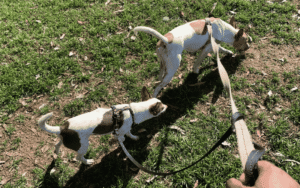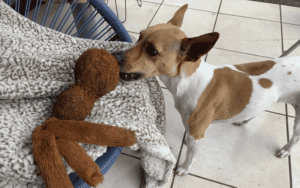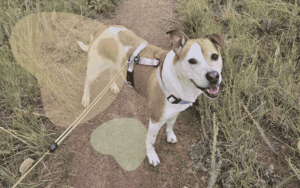
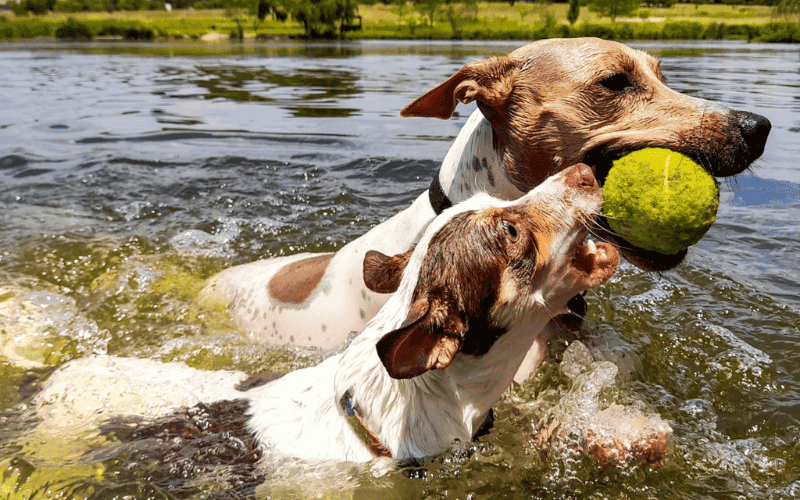
Luna and Taner have taught me that there is no single right way to play with a dog. Luna, my Jack Russell mix, is always ready for action, while Taner is more relaxed and selective about what he enjoys. Over the years, I have learned that the best play sessions come from paying attention to the individual dog in front of you.
Some dogs want to chase a ball until you are exhausted. Others would rather search for treats, play tug, swim, sniff their way around the neighbourhood or simply enjoy a quieter game with you on the floor. The key is to find what your dog genuinely enjoys.
Understand Your Dog’s Play Style
Your dog’s personality, age, breed tendencies and energy level can all influence how they prefer to play. Watch what they do when they are excited.
- The initiator: Brings you toys or repeatedly asks you to play. Interactive games such as fetch and tug may be a good fit.
- The chaser: Loves pursuing moving objects. Fetch and flirt pole games can provide an outlet for that behaviour.
- The thinker: Enjoys working things out. Scent games, snuffle mats and puzzle toys may be more rewarding than endless rounds of fetch.
- The calm companion: Prefers gentle interaction, slower walks and short, low-intensity games.
Trial and error matters. Introduce different games and see which ones your dog returns to. Never force participation. Some dogs also enjoy solo play, whether that means tossing a toy around, shaking it or chewing independently. Just supervise appropriately, especially if your dog destroys or swallows pieces of toys.
Age matters too. Puppies usually have plenty of energy but shorter attention spans, while senior dogs may need gentler, lower-impact activities. Short sessions with regular breaks are often more useful than trying to keep every dog playing for the same amount of time.
Why Playing With Your Dog Matters
Play is not just a way to burn energy. It gives your dog opportunities for physical activity, mental stimulation and social interaction while helping strengthen your relationship.
High-energy games such as fetch and running can provide physical exercise, while scent work, puzzle toys and training games challenge the brain. Mixing these activities can be especially useful for dogs that become bored or restless when their routine only includes physical exercise.
Play can also help you practise useful skills. A game of fetch can reinforce recall and returning an item, while tug can be an opportunity to practise a reliable “drop it” cue.
1. Play Fetch
Fetch is an obvious favourite for many active dogs. Luna certainly agrees.
Choose a safe area with enough space and avoid repetitive high-speed turns on hard surfaces. Start with short throws and stop before your dog becomes overtired.
Not every dog naturally brings the toy back, so teach the game in stages:
- Toss the toy a short distance.
- Encourage your dog to come back to you.
- Offer a treat or second toy as a trade.
- Reward your dog when they return.
- Gradually increase the distance.
The goal is to make returning the toy part of the fun rather than turning it into a battle over possession.
For dogs who become bored with one toy, try rotating balls and other safe fetch toys.
2. Play Tug-of-War
Tug is a perfectly good game for dogs who enjoy it, provided everyone plays safely.
Teach three simple cues:
- Take it to start the game.
- Drop it or out to release the toy.
- All done to end play.
Keep the movements controlled and avoid jerking your dog’s head or neck. If teeth make contact with skin, the game ends immediately. If your dog becomes overly excited, pause and allow them to settle before continuing.
Tug can also work as a simple lesson in turn-taking: the dog learns that releasing the toy does not mean the fun is over. In fact, letting go can restart the game.
3. Use Scent Games and Hide-and-Seek
Some of the best games require very little space. This is particularly useful when you live in an apartment or need an indoor activity.
Start with simple games:
- Hide a treat under a cup and encourage your dog to find it.
- Scatter part of their meal around a room or garden.
- Hide a favourite toy behind furniture.
- Hide yourself and call your dog.
- Use a snuffle mat for a short nose-work session.
Make the game easy at first. As your dog becomes more confident, increase the difficulty by using different rooms, adding turns to a scent trail or hiding items out of sight.
Scent games can provide a satisfying alternative to high-energy play and are especially useful when outdoor exercise is limited.
4. Take a Sniffari
A Sniffari is a slow, sniff-led walk where exploration matters more than distance.
Instead of constantly encouraging your dog to keep moving, allow them time to investigate interesting smells. Choose a safe route, use a comfortable harness and leash, and give your dog opportunities to stop and sniff.
A full Sniffari might last 15 to 30 minutes, while a five- to ten-minute micro-Sniffari can work as a quick enrichment break.
5. Try Swimming or Water Play
For dogs that enjoy water, swimming can be another way to play and exercise.
Start slowly, especially with hesitant or inexperienced dogs. Never force a dog into deep water. Begin somewhere shallow where they can comfortably stand, and use praise or a favourite floating toy to encourage exploration.
Always supervise your dog and make sure there is an easy exit from the water. A properly fitted canine life jacket can help inexperienced swimmers. Avoid questionable water quality, including stagnant or visibly contaminated water, and rinse your dog afterwards.
Swimming is not for every dog, and that is fine. Play should suit the individual dog, not the activity you think they should enjoy.
6. Run and Explore Together
Some active adult dogs enjoy running with their owners, but build up gradually. Start with brisk walks and short jogging intervals rather than immediately attempting long distances.
Plan routes with opportunities to stop for water and sniffing. Avoid hot pavement, watch for fatigue and check paws after running.
Not every dog is built for or enjoys running, so always put your dog’s comfort ahead of your pace.
Don’t Forget Low-Key Play
Play does not always need a toy, a command or a lot of movement.
Some dogs enjoy quieter, more social interaction. Sit or lie on the floor at their level, use relaxed body language and see whether your dog chooses to engage. A gentle nudge, play bow or playful movement can be an invitation, but then pause and let your dog decide whether to respond.
This kind of interaction should feel like a conversation. Invite, pause and respond. If your dog moves away or does not engage, leave it there.
The best play is mutual.
Playing With Multiple Dogs
When you have more than one dog, play can become complicated because each dog may want something different.
Luna and Taner are a good example. One dog may want a fast-paced game while the other would rather sniff around or play independently. Giving them regular one-on-one play time helps make sure neither dog is always expected to participate in the same activity.
When dogs play together, watch their body language. Loose, relaxed movements and natural pauses are generally good signs. Step in if play becomes increasingly intense, one dog is trying to leave or avoid the other, or tension develops around toys or food.
For dogs with resource-guarding issues, avoid forcing them to share high-value toys. Separate activities may be the safer option.
Choose Toys for the Way Your Dog Plays
The best toy is not necessarily the most expensive one. Match it to your dog’s size, chewing habits and preferred type of play.
A simple rotation can also help prevent every toy from becoming background clutter. Keep a few toys available and swap them regularly.
Check toys for damage and remove anything with loose pieces, exposed stuffing or parts your dog could swallow. Choose toys large enough for your dog’s mouth and appropriate for their chewing strength.
What if Play Gets Too Intense?
Overstimulation can turn a good game into barking, nipping, frantic behaviour or ignored cues.
When that happens, stop the game calmly. Use a consistent cue such as “all done,” remove the source of excitement and give your dog time to settle. You can then redirect them to a quieter activity, such as a chew, snuffle mat or simple scent game.
If multiple dogs become tense around a toy, separate them safely rather than grabbing the disputed item.
Persistent resource guarding, aggression or sudden changes in behaviour are situations where professional help from a qualified trainer or veterinary behaviourist may be appropriate.
A Simple Way to Add More Play to Your Week
You do not need to spend hours inventing new activities. Try rotating between different types of play:
- Day 1: Fetch or another active game.
- Day 2: Scent work or a snuffle mat.
- Day 3: A Sniffari.
- Day 4: Tug or a short training game.
- Day 5: Rest, gentle play or solo enrichment.
Adjust the routine to your dog. A puppy, senior dog and high-energy working breed will not necessarily need—or enjoy—the same activities.
The most important part of learning how to play with your dog is paying attention. Notice what makes them light up, what leaves them satisfied and what causes them to lose interest. Luna and Taner may live in the same home, but they do not play in the same way—and that is the whole point.
Play does not have to be complicated. A few minutes of fetch, a game of tug, a hidden treat or a slow sniff around the block can be enough to make time together more interesting for both of you.