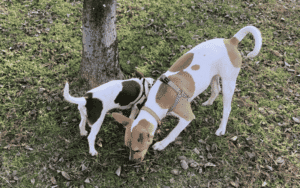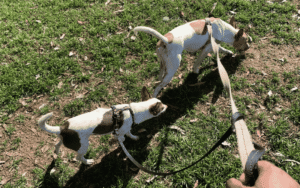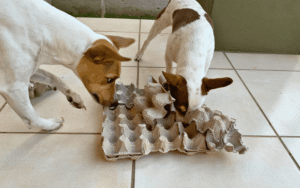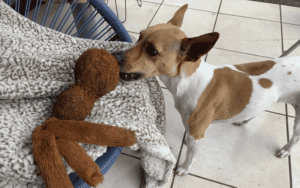
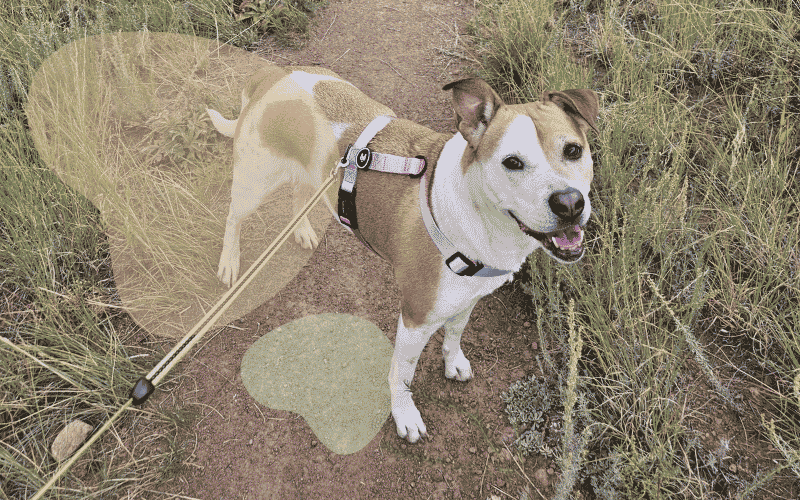
Physical enrichment gives your dog healthy outlets to move, explore, and play beyond a standard daily walk. By combining intentional physical exercise with mental engagement—such as decompression walks, obstacle courses, or scent games—you can significantly reduce boredom-based behaviors, build body awareness, and support your dog’s overall physical health and mental well-being.
The best activities will depend on your dog’s age, breed, health, personality and energy level. A high-energy working breed may enjoy agility, hiking or a game of fetch, while an older dog may prefer gentle walks, swimming or low-impact exercises. The goal is not to exhaust your dog. Good physical enrichment gives them something enjoyable and appropriate to do.
Why Physical Enrichment Matters
Dogs need more than a quick trip around the block to stay physically and mentally satisfied. Regular movement can help maintain fitness, improve coordination and give dogs an appropriate outlet for their energy.
When dogs do not have enough opportunities to move and engage with their environment, that frustration can sometimes show up at home. Common signs of under-stimulation include:
- Excessive barking
- Destructive chewing
- Pacing or difficulty settling
- Restlessness
- Constant attention-seeking
Of course, these behaviours can have other causes, so increased exercise is not always the answer. But providing your dog with regular opportunities to move, explore and play can form an important part of a balanced enrichment routine.
Physical activity can also include an element of problem-solving. Asking your dog to wait before retrieving a ball, navigate an obstacle or follow cues during tug turns exercise into something more engaging than simply running until they are tired.
Physical Enrichment Goes Beyond Exercise
Physical enrichment is not simply about how far your dog walks or how much energy they burn. It is also about creating opportunities for them to use their bodies and engage in behaviours they enjoy.
For some dogs, that may mean chasing and retrieving. For others, it may be digging, climbing, swimming, sniffing or navigating uneven terrain.
Terriers, for example, may enjoy an appropriate digging area such as a sandpit. A dog that loves to chase may prefer fetch or a flirt pole, while a dog that enjoys learning could thrive in agility or another dog sport.
Pay attention to what your dog naturally enjoys. Their preferences can give you a good starting point when choosing enrichment activities.
Take More Interesting Walks
Walks are an important part of many dogs’ routines, but they do not always need to follow the same route at the same pace.
Try a Decompression Walk
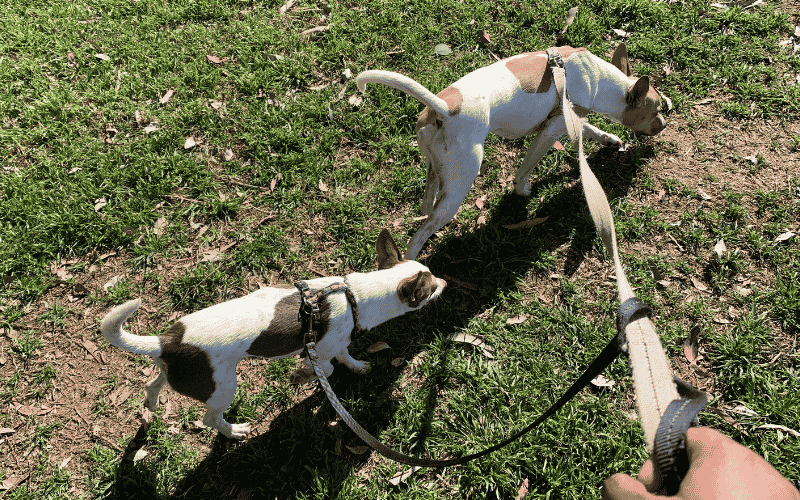
A decompression walk gives your dog more freedom to explore. In a safe area, use a suitable long line and allow your dog to move at their own pace and spend time investigating their surroundings.
Letting your dog stop and sniff can make a walk much more enriching. Dogs gather a huge amount of information through scent, so those pauses are not wasted time. A slower walk where your dog can explore may be more satisfying than rushing through the same route every day.
Go Hiking
Hiking adds variety that a pavement walk cannot always provide. Uneven terrain, changing scents and new surroundings give your dog different physical and sensory challenges.
Walking over rocks, roots and other natural surfaces can encourage balance and coordination while giving your dog plenty to investigate. Choose a trail appropriate for your dog’s fitness level and build up gradually if hiking is new to them.
Create a Simple Obstacle Course
You do not need a professional agility course to give your dog a physical challenge. A garden or living room can work just as well.
Use stable household items to create simple activities such as:
- Weaving between cones or objects
- Stepping over low poles
- Walking around boxes
- Moving through a tunnel
- Balancing or stepping onto a stable platform
Start with one easy obstacle and let your dog build confidence before adding more. Use treats, praise or a favourite toy to encourage them through the activity.
Keep everything low, stable and appropriate for your dog’s size and ability. Use non-slip surfaces where possible, and never force your dog to complete an obstacle they find uncomfortable.
Changing the layout occasionally can also keep the activity interesting.
Play Fetch With a Purpose
Fetch is a favourite for many dogs because it gives them an opportunity to chase and retrieve. You can make the game more engaging by adding simple training and changing how you play.
Try rotating toys, changing the direction of your throws or hiding a toy for your dog to find. If your dog does not naturally bring the toy back, using two identical toys can encourage them to return for another throw.
You can also add impulse control. Ask your dog to sit and wait before throwing the toy, then release them when you are ready. This adds a training element and encourages them to think before reacting.
Choose an area with secure footing and enough open space. Avoid throws that encourage sudden twisting, awkward landings or excessive jumping.
Play Tug With Clear Rules
Tug is another simple form of physical enrichment that can also include training. Use a durable toy that is appropriate for your dog’s size and teach cues such as “take it” and “drop it.”
These cues give the game some structure and allow you to pause and restart play.
Keep the movement controlled and avoid pulling the toy aggressively from side to side. Let your dog pull and engage with the game, and do not forget to let them win occasionally.
For many dogs, tug is an enjoyable way to channel chasing and grabbing behaviours while strengthening the connection between dog and owner.
Try a Flirt Pole
A flirt pole can be a great option for dogs that love to chase. It allows them to sprint, follow movement and engage in short bursts of activity.
As with fetch, adding cues can make the game more controlled. Ask your dog to wait before starting and practise a reliable release when the game ends.
Keep sessions short and provide regular breaks, particularly for dogs that become highly excited. Because flirt poles can involve quick turns and sudden acceleration, use them on safe footing and avoid encouraging sharp movements that could cause injury.
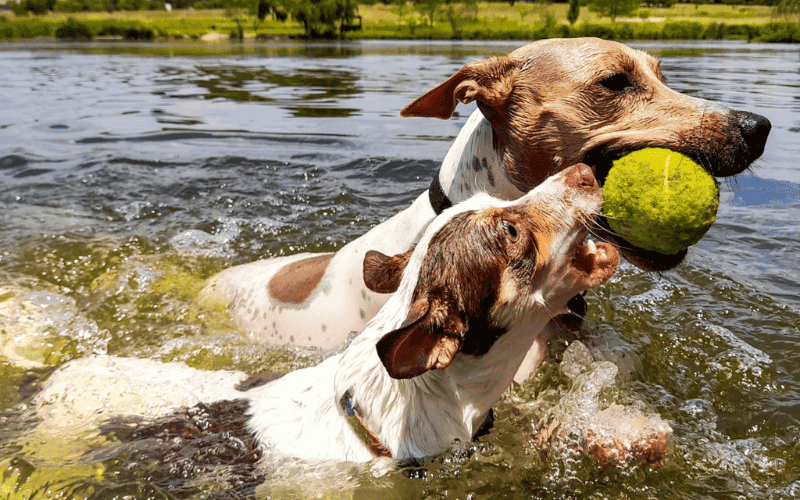
Make Swimming Part of the Routine
For dogs that enjoy water, swimming offers a different way to exercise. It can be especially useful for dogs that need a lower-impact activity.
Start in calm, shallow water and allow your dog to enter at their own pace. Not every dog enjoys swimming, and there is no reason to force them.
Always supervise your dog around water. A properly fitted dog life jacket can provide additional safety around pools, lakes and moving water. Make sure fresh drinking water is available, discourage your dog from drinking pool or lake water and rinse their coat afterwards.
Add Body Awareness Exercises at Home
You can also include simple exercises that encourage your dog to think about how they move.
Activities such as controlled sit-to-stand repetitions, stepping over low poles or moving carefully around obstacles can help build coordination and body awareness.
Balance equipment, such as wobble boards or balance discs, should be introduced gradually and used carefully. Start by rewarding your dog for simply stepping onto the equipment rather than expecting them to perform advanced exercises immediately.
If you are introducing fitness exercises or equipment, particularly for a senior dog or a dog with an existing physical condition, it is worth speaking to a qualified professional before getting started.
A short warm-up, such as a gentle walk, can also help prepare your dog before more active play.
Explore Dog Sports
Some dogs enjoy having a regular activity that gives them a clear task to complete. Dog sports can combine movement, training and problem-solving in one activity.
Options include:
- Agility
- Rally obedience
- Scent work and nose work
- Dock diving
- Flyball
- Disc dog
- Urban herding
- Canine parkour
Beginner classes can be a good way to introduce a new activity safely while finding out what your dog actually enjoys. You do not need a competition dog to participate.
The best activity is one that suits your individual dog and gives both of you something you look forward to doing together.
Combine Movement and Mental Stimulation
Physical enrichment does not need to happen separately from mental enrichment. Some of the best activities involve both.
Puzzle feeders, for example, can encourage dogs to nudge, flip and move objects to access their food. A game of fetch can include waiting and listening for a release cue. An obstacle course requires your dog to navigate their environment while following your guidance.
You can also hide a toy and encourage your dog to search for it, combining movement with scent work and problem-solving.
These activities can make play more varied without requiring you to exercise your dog for longer periods.
Match Activities to Your Dog
There is no single physical enrichment routine that works for every dog.
Consider your dog’s:
- Age
- Breed and natural tendencies
- Health and mobility
- Fitness level
- Personality
- Interests
A young, energetic dog may enjoy longer hikes, fetch or agility. A senior dog may benefit more from gentle exploration, low-impact movement and activities that support mobility without overexertion.
Build up new activities gradually and watch how your dog responds. Signs of discomfort, fatigue or reluctance are a reason to stop and reassess.
Physical enrichment gives dogs more opportunities to do what dogs naturally enjoy: move, explore, chase, climb, investigate and play.
Daily walks are an important starting point, but variety can make your dog’s routine far more interesting. A decompression walk, game of tug, flirt pole session, hike, obstacle course or swim can all offer something different.
You do not need to fill every day with elaborate activities. A few well-chosen opportunities to move and engage can make a meaningful difference. The key is to choose activities your dog enjoys and adapt them to their age, health and ability.
When physical activity is combined with exploration, training and play, it can become much more than exercise. It becomes another way to give your dog a fuller and more interesting life.