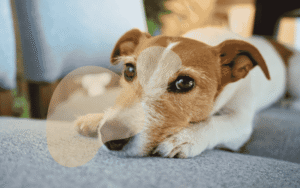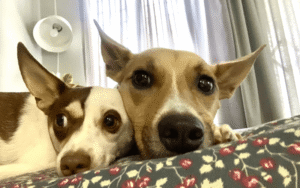
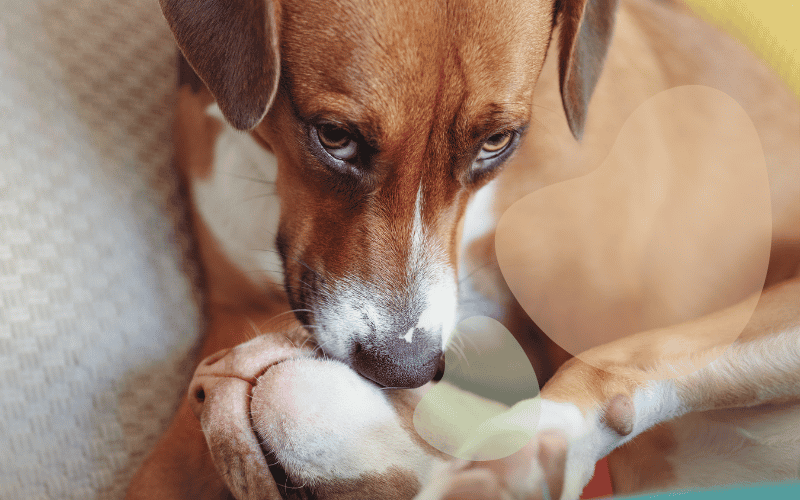
Our dogs communicate with us all the time. They use their eyes, ears, mouth, posture, tail, movement and sounds to show how they feel and what they need.
The tricky part is that no single signal has one fixed meaning. A wagging tail doesn’t always mean a happy dog, and a yawn doesn’t always mean your dog is tired. To understand what your dog is telling you, look at their whole body, consider the situation, and get to know their individual communication style. For example, lip licking while dinner is being prepared may simply mean your dog is anticipating food. The same behaviour while being lifted into the car could mean they are worried.
Learning to read your dog’s body language can help you spot discomfort early, give your dog the space they need and prevent situations from escalating.
Read the Whole Dog, Not Just One Signal
It is easy to focus on one obvious cue, especially a wagging tail or raised hackles. But your dog’s body language makes more sense when you put all the pieces together.
Look at:
- Eyes: Soft, squinting or hard and staring?
- Ears: In their natural position, pulled back or stiffly forward?
- Mouth: Relaxed, tightly closed, licking or showing teeth?
- Body: Loose and fluid, lowered, frozen or leaning forward?
- Tail: Neutral, tucked, high, loose or stiff?
- Movement: Bouncy and relaxed, hesitant, pacing or suddenly still?
- Context: What is happening around your dog?
Dogs can also show mixed signals. A dog may wag their tail while feeling nervous, or look excited while becoming overstimulated. The whole body gives you a much clearer picture.
Remember that every dog is different, too. Dark coats, long fur, floppy ears, tightly curled tails and certain facial features can make subtle signals harder to see. Your own dog may also have habits that are unique to them.
Relaxed and Comfortable Body Language
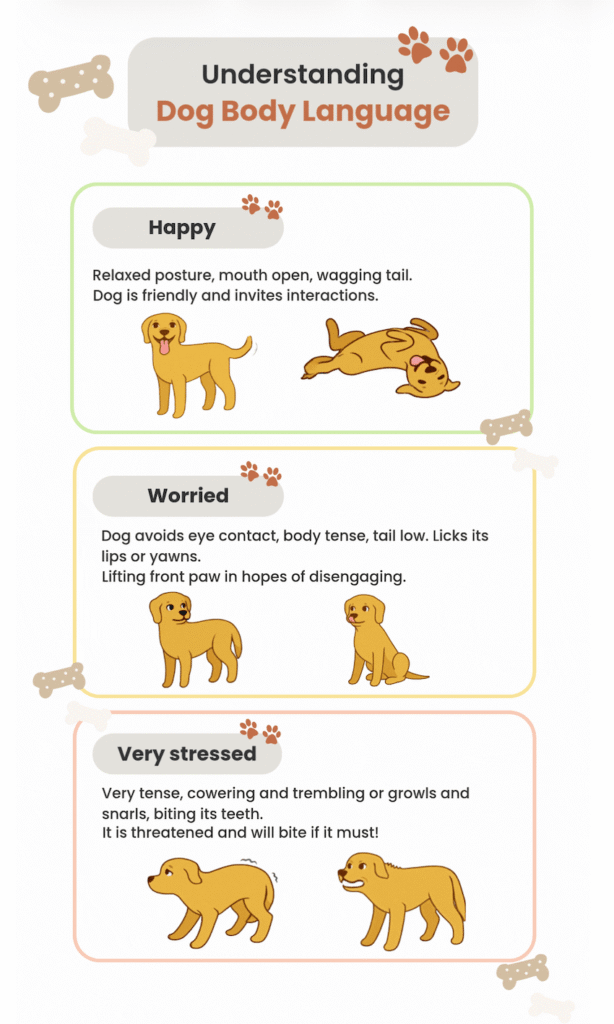
A relaxed dog usually looks soft, loose and comfortable. Their weight is evenly distributed, their muscles are not tense, and they can pay attention to their surroundings without appearing on edge.
You may notice:
- Soft or gently squinting eyes
- Ears resting in their natural position
- A relaxed, slightly open mouth
- Loose, fluid movement
- A tail moving naturally
- A relaxed face and body
- The ability to settle, rest or calmly sniff their surroundings
A comfortable dog may also seek affection, play independently or stretch out to sleep. During play, you may see a play bow: the front end lowers while the back stays up. This is often an invitation to play and helps communicate friendly intent.
A relaxed dog does not have to be energetic. Calmly lying nearby or quietly watching the world can be a good sign that your dog feels safe.
Alert, Curious and Interested
An alert dog is simply paying close attention to something. Alertness is not automatically a sign of fear or aggression.
You might see:
- Ears turning towards a sound or movement
- Focused eyes
- A closed mouth
- A still or slightly forward body
- One front paw lifted
- A head tilt
- A tail held higher than usual
Your dog may pause during a walk, stop chewing a toy or look out the window while they work out what is happening.
The important question is what happens next. A dog may move from alertness into curiosity and excitement, or they may become worried or defensive depending on the situation.
Excitement and Play
Happy, playful dogs often use bigger, more exaggerated movements. Their bodies generally remain loose, even when they are moving quickly.
Common signs include:
- Bouncing or prancing
- Wide, sweeping tail movements
- A wiggling body
- Soft, round eyes
- An open, relaxed mouth
- Bringing you a toy
- Play bows
- Poking another dog or person to start a game
Excitement, however, is about intensity, not necessarily happiness. A dog can become so excited that they struggle to focus, respond to their name or listen to familiar cues. This can turn into frustration or overstimulation.
If your dog is becoming frantic, unable to focus, or too wound up to respond, give them a break. Moving to a quieter space, allowing them to sniff or offering a safe chew can help them settle.
Early Signs of Stress or Anxiety
Dogs often communicate discomfort before they growl, snap or bite. These early signals can be subtle and easy to miss.
Watch for:
- Turning the head away
- Avoiding eye contact
- Repeated blinking
- Lip licking or tongue flicking when food is not involved
- Yawning when not tired
- A lifted front paw
- Ears held back
- A lowered body or head
- A low or tucked tail
- Moving away or hiding
- Freezing or becoming unusually still
- Pacing or restlessness
- Difficulty focusing on you
- Trembling or shaking when not cold
- Panting when not warm or active
Some dogs may also show whale eye, where they turn their head away but keep looking towards something, showing the whites of their eyes.
These signals do not always mean the same thing. A yawn may mean tiredness, and lip licking may happen because food is nearby. Again, context matters.
If your dog is showing several signs of stress, stop and consider what might be making them uncomfortable. Create more distance from the trigger where possible and avoid forcing them to interact. If your dog struggles with stress or anxiety, understanding the canine ladder of aggression can help you recognise early warning signs and respond before they become overwhelmed.
Appeasement and “I Need Space” Signals
Dogs often try to avoid conflict. They may use appeasement signals to show that they are not a threat or that they want an interaction to end.
These can include:
- Looking or turning away
- Lowering the head or body
- Lip licking
- Ears pulled back
- A low or tucked tail
- Walking away
- Crouching
- Rolling onto their back
- A submissive-looking grin with an otherwise relaxed body
One important point: showing the belly does not always mean “please rub my tummy.” If the dog is tense, has their ears back and tail tucked, rolling over may be an attempt to end or avoid the interaction.
Pay attention to what the rest of the body is saying before reaching in for that belly rub.
Displacement Behaviours
Sometimes dogs perform ordinary behaviours at unusual times to cope with mild stress or redirect their attention. These are known as displacement behaviours.
Examples include:
- Shaking off when they are not wet
- Sniffing the ground
- Yawning
- Scratching
- Suddenly grooming themselves
- Sneezing
- Stretching without an obvious reason
- Pacing or spinning
- Drinking when they are not thirsty
For example, your dog may have a slightly stressful interaction and then do a full-body shake as if they have just come out of the bath.
These behaviours should always be considered alongside the rest of your dog’s body language. Some can also be linked to pain or medical issues.
Frustration and Overwhelm
Frustration can happen when a dog wants something but cannot get to it. On a walk, this might be another dog, a person or something moving in the distance.
Early signs may include:
- Whining or attention barking
- Pulling on the lead
- Mouthing or jumping
- Stamping their feet
- Air snapping
- Intense focus on something they cannot reach
As frustration or overstimulation increases, your dog may become more tense, less interested in treats and less able to respond to you. They may bark, lunge, spin or redirect their frustration towards something nearby.
Raised hackles can also appear during high stimulation. They are a physical response and do not automatically mean a dog is aggressive.
When Your Dog Needs Space Immediately
Some signals mean you should calmly end the interaction and create distance.
These include:
- A stiff or frozen body
- Hard, fixed staring
- A tense, closed mouth
- Lips pulled back or teeth showing
- Growling or snarling
- Air snapping
- Lunging
- Snapping towards a person or dog
- A high, stiff tail
- Intense stress panting
- Being unable to respond to you or take food
These behaviours are communication. Your dog is telling you they are struggling and need the situation to change.
Do not punish a growl. A growl is a warning, and removing that warning does not remove the underlying discomfort. Instead, calmly create space and look at what pushed your dog to that point.
A Wagging Tail Does Not Always Mean a Happy Dog
Tail wagging is probably one of the most misunderstood dog signals.
A relaxed, friendly wag is often loose and accompanied by a soft body. Some dogs wag their whole back end or move their tail in a circular “helicopter” motion.
But a wagging tail can also indicate excitement, uncertainty, frustration or high arousal.
Consider:
- High and stiff: Your dog is highly alert or aroused.
- High with slow movement: They may be assessing a situation.
- Low or tucked: Often linked to uncertainty, fear or discomfort.
- Short, stiff wags: Can signal tension.
- Loose, sweeping or circular wags with a wiggly body: More likely to indicate relaxed friendliness.
Never judge a dog’s mood by their tail alone.
Understanding Vocalisations
Body language comes first, but sounds can provide useful clues.
Barking may signal excitement, alertness, frustration, fear or a warning. The situation and accompanying body language matter more than the bark alone.
Whining can mean excitement, a request for attention, anticipation, stress or discomfort. Over time, you will learn your dog’s different whines and what they usually mean.
Panting can be normal after exercise or when your dog is warm. It can also be a sign of stress or discomfort. Heavy or unusual panting, especially when your dog is resting, should be taken seriously.
Growling is a clear request for space or a warning that your dog is uncomfortable. Listen to it rather than punishing it.
Give Your Dog Their Critical Distance
Dogs often cope better when they have enough space between themselves and something they find worrying. This distance is different for every dog and can change depending on the situation.
Your dog might calmly watch one quiet dog from across the street but struggle if several dogs are barking and running around.
Learn your dog’s limits. If you notice early signs of stress, increase the distance before they become overwhelmed.
Understanding your dog’s body language is not about memorising a list of signals. It is about learning to observe your individual dog.
Look at their whole body. Consider what is happening around them. Notice the small changes before they become bigger reactions.
Dogs often start by communicating quietly. They may look away, lick their lips, slow down or move away. If those signals are missed, they may feel they have to become more direct.
The better you understand what your dog is saying, the easier it becomes to respond before they feel pushed beyond their comfort zone. That can help prevent stressful situations, strengthen your bond and, most importantly, help your dog feel heard.