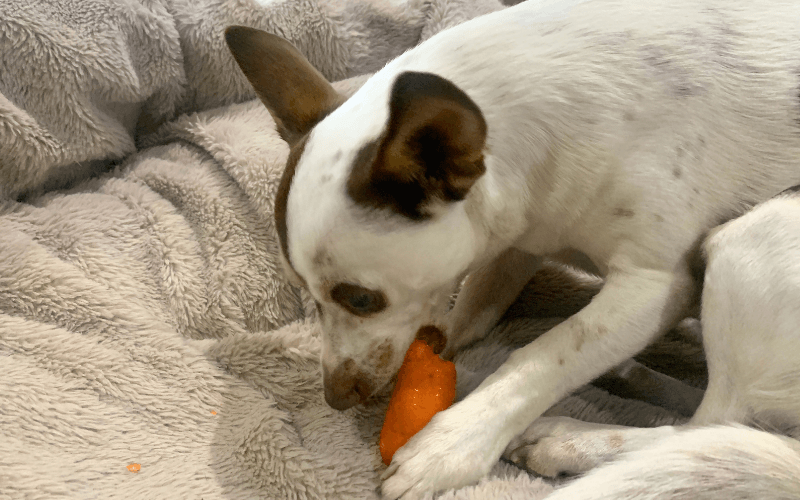
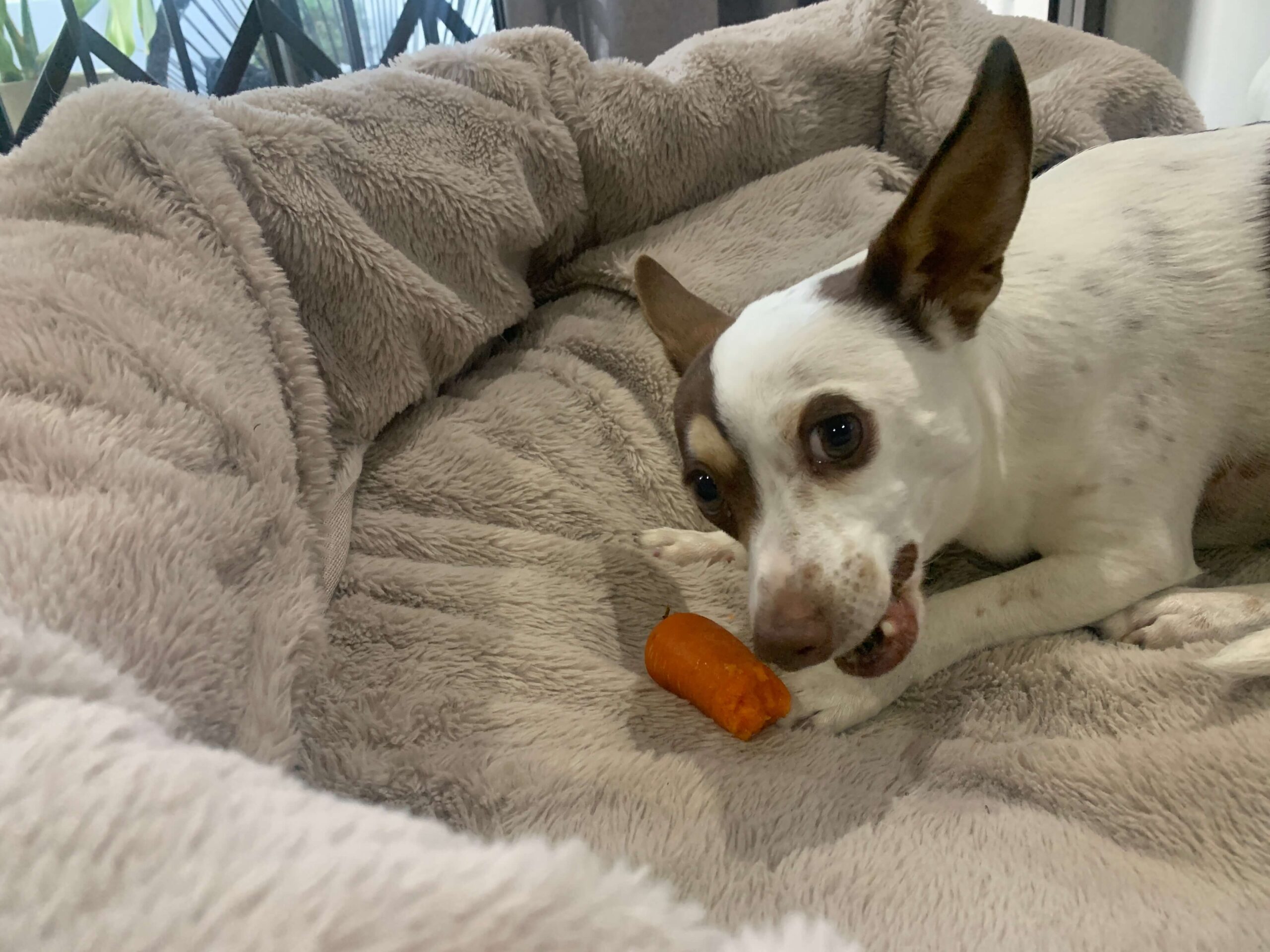
Carrots are a favourite in our home. Luna and Taner love the satisfying crunch, and I love that they’re a simple, low-calorie alternative to processed treats.
The good news is that most dogs can safely eat carrots. They’re packed with vitamins, fibre, and antioxidants, and can be served raw or cooked in several different ways. But, as with any human food, how much you give your dog and how you prepare it matters.
If your dog is on a prescription diet or has an existing health condition, check with your veterinarian before introducing carrots or any other food outside their usual diet. What’s suitable for one dog may not be appropriate for another.
Are Carrots Good for Dogs?
Plain carrots can be a nutritious addition to your dog’s treat rotation. They’re low in calories and fat while providing several nutrients that support your dog’s overall health.
Support Eye Health
Carrots are rich in beta-carotene, which the body converts into vitamin A. Vitamin A plays an important role in healthy eyesight, growth, and immune function.
Support Digestion
Carrots are a good source of dietary fibre. Their soluble fibre can help support healthy digestion, maintain regular bowel movements, and help your dog feel fuller between meals.
Provide Vitamins, Minerals and Antioxidants
Along with beta-carotene, carrots provide vitamins, minerals, and antioxidants that support areas such as your dog’s skin, coat, and overall wellbeing.
Help With Weight Management
Because carrots are naturally low in calories and fat, they can be a useful alternative to higher-calorie commercial treats. Small pieces can also be used as training rewards when you need to give your dog frequent treats.
Carrots aren’t a weight-loss solution on their own, though. Portion size and your dog’s overall diet still matter.
Satisfy the Urge to Chew
The natural crunch of a raw carrot can make it an enjoyable snack for dogs that like to chew. The firm texture may also help remove some food and buildup from the teeth and tongue as your dog chews.
That said, carrots shouldn’t replace proper dental care. Regular brushing and veterinary dental care are still important for maintaining your dog’s oral health.
Are Carrots Safe for Dogs?
Yes, plain carrots are generally safe for dogs, including raw, steamed, boiled, or baked carrots.
The important word here is plain. Avoid serving carrots with ingredients that can be harmful or unnecessary for dogs, such as butter, oil, salt, sugar, or seasonings. Canned carrots with added salt should also be avoided.
And while a plain carrot can make a healthy snack, foods made with carrots aren’t automatically dog-friendly. Carrot cake, for example, can contain high amounts of sugar and fat and may include other ingredients that aren’t suitable for dogs.
How to Safely Prepare Carrots for Your Dog
A few simple preparation steps can make carrots safer and easier for your dog to enjoy.
Wash Them Thoroughly
Rinse carrots under cool running water to remove dirt and potential pesticide residue. You don’t need to peel them if you’ve cleaned them properly, though you can if you prefer.
Cut Them Into Safe Pieces
Large pieces of raw carrot can become a choking hazard or, if swallowed whole, potentially contribute to an intestinal blockage. This is particularly important for small dogs, puppies and dogs that tend to gulp their food.
Personally, I prefer giving my dogs whole carrots. Luna and Taner nibble at them and gradually break them down into smaller pieces rather than trying to eat the carrot in one go. However, this may not suit every dog.
If you’re introducing carrots for the first time, or you have a small dog or puppy, cut the carrot into small, manageable pieces or thin sticks appropriate for their size and chewing habits. A slice around ¼-inch thick is one general guideline, but the right size depends on your individual dog.
Never leave your dog unsupervised with a whole carrot.
Raw or Cooked?
Both are suitable, so you can choose based on your dog’s preferences and ability to chew.
Raw carrots provide that satisfying crunch and can be served as small sticks or slices.
Steamed or boiled carrots are softer and may be easier for some dogs to chew and digest.
Baked carrots are another option, provided they’re cooked plain without added oils, butter, sugar, salt, or seasonings.
For older dogs or dogs with sensitive teeth, cooked carrots can be blended into a smooth puree and mixed into their regular food.
Fun Ways to Give Your Dog Carrots
You don’t have to serve carrots the same way every time. Changing the texture can keep snack time interesting and give you more ways to use them as enrichment.
As a Simple Snack
Cut raw carrots into appropriately sized slices or sticks and serve them plain as an occasional treat. If you’re introducing carrots for the first time, or simply want to add variety, commercial dog treats containing carrots can also be a great option.
Mixed Into Their Food
Small pieces of cooked carrot can be mixed into your dog’s regular meal. You can also combine them with other dog-safe foods such as cooked rice, sweet potatoes, peas, celery, or broccoli.
Just remember that additions like these should complement, not replace, a complete and balanced diet.
Frozen for Teething Puppies
Frozen carrot sticks can provide a cold, soothing texture for puppies that are teething. Make sure the piece is an appropriate size and supervise your puppy while they’re chewing.
Pureed Into a Lick Mat or Toy
Cook carrots until soft, blend them, and allow the mixture to cool before using it as an enrichment activity.
You can spread a small amount onto a lick mat or use it to stuff a suitable food toy such as the classic stuffable KONG. This turns a simple vegetable into an engaging snack that encourages licking and problem-solving.
How Many Carrots Can a Dog Eat?
Even healthy treats should be given in moderation.
A commonly used guideline is the 10% treat rule: treats and other extras should account for no more than 10% of your dog’s daily calorie intake, while the remaining 90% should come from a complete and balanced dog food.
That 10% includes all treats, chews, snacks, and human foods—not just carrots.
There isn’t one exact number of carrots that’s right for every dog. Your dog’s size, weight, age, activity level, health, and overall diet all affect how much they can have.
If you’re introducing carrots, start with a small amount rather than giving your dog a large serving straight away.
Can Carrots Cause Problems for Dogs?
Although carrots are safe for most healthy dogs, there are a few things to watch for.
Too Many Can Cause Digestive Upset
Carrots contain natural sugars and fibre. Too many can contribute to digestive problems, particularly if your dog isn’t used to them.
Watch for:
- Vomiting
- Diarrhoea
- Gas
- Changes in stool
- General digestive discomfort
If your dog develops digestive symptoms after eating carrots, stop giving them and speak with your veterinarian if the symptoms persist or concern you.
Choking or Blockage Risk
Large pieces can become lodged in your dog’s throat or cause problems if swallowed whole. Always choose a size appropriate for your dog’s mouth and chewing habits, especially if they tend to gulp their food.
Some Dogs May Have Sensitivities
Even foods considered healthy can cause problems for individual dogs. If you notice itching, skin changes, vomiting, diarrhoea, or other unusual symptoms after introducing carrots, stop feeding them and contact your veterinarian for guidance.
Dogs With Certain Health Conditions May Need Extra Care
Dogs with conditions such as diabetes or obesity may need closer attention to the amount of natural sugar and calories they receive.
If your dog has a health condition, a sensitive stomach, or follows a prescription diet, check with your veterinarian before adding carrots to their meals or treat rotation. Dogs on prescription diets shouldn’t receive foods or treats outside that diet unless their veterinarian has approved them.
Carrots as Training Treats
Carrots can be particularly useful when you’re training because you can cut them into very small pieces and give frequent rewards without relying entirely on calorie-dense commercial treats.
For dogs that enjoy crunchy food, a tiny piece of carrot can be enough to reinforce a behaviour. Just remember to count those pieces toward your dog’s daily treat allowance.
For frequent training sessions, you can also use a mixture of carrot and your dog’s regular food so you’re not adding large amounts of extra food to their daily intake.
What Other Vegetables Can Dogs Eat?
Carrots aren’t the only dog-friendly vegetable you can use as an occasional snack or meal addition. Other options include:
As with carrots, preparation matters. Keep vegetables plain and avoid adding ingredients such as salt, butter, oil, sugar, or seasonings unless your veterinarian has specifically recommended otherwise.
When to Give Your Dog Carrots—and When to Hold Off
Carrots can be an easy, affordable addition to your dog’s treat rotation. They work as a crunchy snack, a training reward, an enrichment ingredient, or a softer addition to meals when cooked and pureed.
The key is keeping things simple:
- Wash carrots thoroughly before serving.
- Cut them into appropriately sized pieces to reduce choking and blockage risks.
- Serve them plain, whether raw or cooked.
- Introduce them gradually, especially if they’re new to your dog.
- Keep portions moderate and include carrots within the 10% daily treat allowance.
- Use softer or pureed carrots if your dog struggles with crunchy foods.
- Supervise your dog, particularly with raw or frozen carrot pieces.
- Watch for digestive or other reactions when introducing them.
- Check with your veterinarian if your dog has a health condition or follows a prescription diet.
For Luna and Taner, carrots are one of those simple treats that earn an enthusiastic crunch without making snack time complicated. Keep a few in the fridge, cut them into dog-friendly pieces, and you’ve got an easy option for training, enrichment, or an occasional snack.