
You are currently viewing Studio Apartment Ideas for Dog Owners

Studio Apartment Ideas for Dog Owners

  • Post last modified:July 11, 2026
  • Reading time:13 mins read
  • Post author:

The Home Gardens (Blog) is reader-supported. When you buy through links on this page, we may earn an affiliate commission at no additional cost to you.

Key Takeaways

  • Maximise vertical space to free floor areas for movement and play.
  • Choose multi‑functional furniture that doubles as storage or a pet bed to save room.
  • Create a dedicated, quiet retreat space for your dog so they have a secure spot to relax.
  • Use hidden storage solutions to keep toys, leashes and feeding items tidy and accessible.
  • Maintain a simple daily or weekly cleaning routine and control indoor air quality for a fresher studio.

Living in a small home with your dog can be challenging, but it also offers a chance to create a cosy, efficient space that works for both of you. With a few smart changes, from vertical storage to multi‑purpose furniture, a studio can feel roomy and welcoming.

Designing a Functional Layout for You and Your Pet

Studio apartment living is a lifestyle, and once you’ve honed your style, it’s easy to plan a layout that suits both you and your dog. In a studio, every square meter counts, so arrange furniture and zones to maximise usable space while keeping movement safe and comfortable. 0 compromise on style, of course; I learned that from watching Studio Fix on Alexander Gater, and I’ve never looked back.

Zone Your Living Space

Our home is very relaxed; Luna and Taner are free to move around as they please, but we’ve also established clear zones that help create structure. The kitchen is where meals are prepared, the living room is where they eat, and the bedroom is our shared space for rest. At mealtimes, each dog has their own designated spot in the living room—Taner on one side and Luna on the other—and they know not to cross into each other’s space until everyone has finished eating.

For my own sanity, my living room setup has a natural divide between the kitchen and bedroom, all set on an area rug so my sofa and table are not just floating about. For safety, add non‑slip rug underlays to prevent trips during the zoomies or if you are as clumsy as I am.  

Creating Clear Pathways for Movement

My two rascals are pretty active. But depending on the breed you have, I’d suggest making as much clear space as possible available for their shenanigans.

I prefer airy, open, or elevated furniture that creates the illusion of a larger, more spacious home. Even more so, it’s a fun little obstacle course for our enrichment activities.

Our styles differ, but I am pretty sure if you opt for more fuller furniture pieces, you can create space. There are way too many variables…dog breed, size, budget, style, etc.

Dog-friendly Furniture

Furniture plays a big role in a studio apartment, especially when dogs are part of the household. Before buying anything, decide on the look and feel you want to create.

I prefer an airy, semi-minimalist style with furniture that serves a single purpose, while others may get more value from multi-functional pieces that maximise every square metre.

Find Creative Ways to Store Pet Essentials

There are plenty of stylish ways to store your dog’s belongings without letting them take over your home. From multi-functional furniture with hidden compartments to decorative baskets and containers displayed as part of your decor, choose storage that complements your personal style.

My style is a blend of boho and Scandinavian, so I can’t resist a beautiful woven basket. I’ve even dedicated sections of my cupboards and shelves to Luna and Taner. Although their supplies are stored behind closed doors, everything is sorted into baskets and containers, creating clear, organised spaces that are both practical and aesthetically pleasing.

Selecting Durable and Washable Fabrics

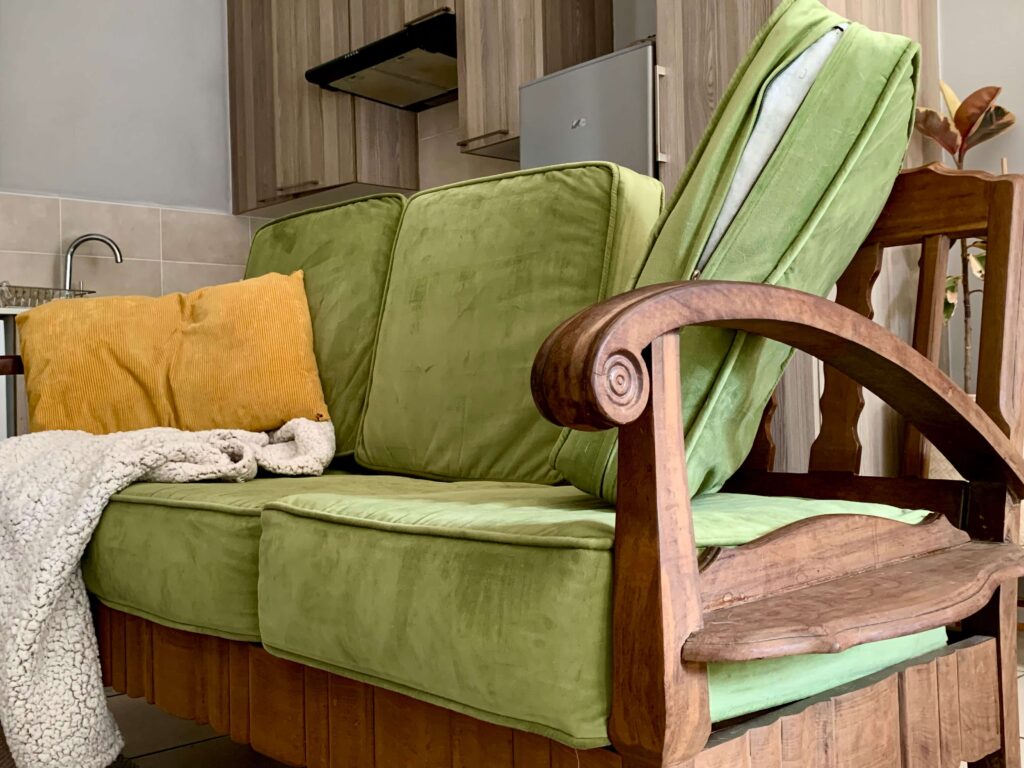
Choose upholstery that can withstand stains and claw marks. I’ve found microfiber, heavy-duty canvas, and high-quality velvet to be the most durable, with velvet being my personal favourite. I even had zips added to my sofa cushion covers, making them easy to remove and wash. The same goes for dog beds; removable, machine-washable covers make cleaning far easier. Just remember to clean your washing machine afterwards to remove any lingering pet hair before your next load of laundry.

The cushions on my sofa have removable velvet covers, one, velvet is great if you have pets and having them removable means I can pop the covers in the washing machine
Our sofa has removable velvet cushion covers, that way we can pop them in the wash when needed.

Vertical Storage Solutions to Maximise Floor Space

When floor space is limited, make the most of your vertical space. Shelves, wall hooks, and tall storage units help keep pet essentials organised without taking up valuable room. Storing upwards instead of outwards will keep the floor clear for everyday living, playtime, and easy movement for both you and your dogs.

Wall-Mounted Shelving for Everyday Essentials

For me, wall-mounted shelving makes the most sense for everyday, out-the-door essentials, especially in a studio apartment and even more so if you’re renting. A simple floating shelf with a few decorative hooks creates a practical entryway without taking up valuable floor space. It’s the perfect spot to hang leashes, harnesses, and even the jacket you always grab before heading out for a walk. Add a small basket or tray on the shelf for treats, waste bags, keys, or other grab-and-go essentials, so everything you need is in one convenient place.

If you’re anything like me, you probably avoid drilling holes or making permanent changes that could cost you your rental deposit or leave you with repairs when it’s time to move out. If I’m mounting a shelf, it’s almost certainly with heavy-duty double-sided mounting tape—paired with a heat gun, of course, to make removal much easier when the time comes. Just be sure to check the tape’s weight rating and the type of wall surface before trusting it with anything heavy.

Let Your Dog Choose Their Safe Space

While many people recommend creating a dedicated corner or crate, I’ve found that every dog is different. Luna and Taner see me as their safe place, so wherever I am, they’re usually not too far behind. Since they spend most of the day at home while I’m at work, I also like to think of the apartment as their space as much as mine.

Rather than assigning them a single resting spot, I let them choose where they’re most comfortable. Sometimes they’ll nap beside me, sometimes they’ll curl up together, and other times they each disappear to opposite ends of the apartment for some alone time. I’ve learned to respect those moments. As much as we know our dogs, they communicate in ways we’ll never fully understand, and I trust them to tell me what they need through their behaviour.

The best thing you can do is provide a few comfortable options—a supportive bed, a cosy blanket on the couch, or a quiet corner—and let your dog decide where they feel safest. A predictable routine and the freedom to choose their own resting place often matter more than creating the “perfect” pet corner.

Managing Air Quality and Odours in Small Apartments

I’m fortunate to live in a north-facing ground-floor studio with a private garden that’s tucked away from heavy foot traffic. That means I can leave my windows open most days to keep fresh air flowing through the apartment. When I don’t have garden access restricted, I’ll also leave the sliding door open so Luna and Taner have a little extra room to wander between indoors and outside. Thanks to the natural sunlight, the apartment stays warm enough that I rarely worry about it getting too cold with the windows open.

Not everyone has that luxury, though. If opening your windows isn’t practical because of security, noise, weather, or air quality, a good air purifier with a True HEPA filter can help remove pet dander and other airborne particles. If it also includes an activated carbon filter, it can help reduce lingering pet odours, keeping your studio feeling fresher between cleaning days.

Routine Cleaning Hacks for Studio Living

I work a 9-to-5, so I don’t have the time or the desire to deep clean every day unless it’s absolutely necessary. Instead, I stick to a weekly cleaning routine, usually on the weekend or on a Friday evening if I have plans.

My routine is fairly straightforward.

  1. I start by vacuuming my bed (before removing the bedding) with a separate upholstery attachment from the one I use on the floors, then I wash all the bedding.
  2. Next, I brush pet hair off the sofa before vacuuming it,
  3. Vacuum the rugs before rolling them up, then sweep underneath after moving any low furniture.
  4. Once the dust and fur are collected, I vacuum again to pick up any remaining hair and finish by mopping the floors.
  5. I also dust surfaces and wipe down the kitchen. I have a more detailed cleaning routine for the rest of the apartment, but since it isn’t specific to living with dogs, I’ll spare you the details.

My monthly clean is a little more involved. I scrub the shower, wash the sofa covers and curtains, clean the mattress, pull out the fridge and washing machine to clean underneath, defrost the freezer if needed, and disinfect the floors. Coincidentally, our monthly hiking trip usually ends with two very muddy dogs, so Luna and Taner get a good bath too.

Accident and Odour Removal

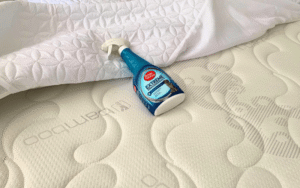
For accidents, I always reach for a pet-safe enzymatic cleaner. Unlike regular household cleaners that simply mask odours, enzymatic cleaners break them down at the source, helping to prevent repeat accidents. If Luna or Taner has an accident during the week, I’ll clean the area immediately with my go-to enzymatic stain and odour remover. Then, when my weekly cleaning day comes around, I’ll follow up with my trusty vinegar solution as part of my regular routine.

If the accident happens on fabric, I deal with it a little differently. Removable items like bedding, sofa covers, or washable rugs go straight into a vinegar-and-water soak before being washed. For larger items, such as curtains, I’ll spot-treat the area with the enzymatic cleaner straight away to eliminate the odour, then take them down over the weekend, soak them in the vinegar solution, and wash them as part of my weekly clean. This routine has worked well for me and helps keep my home smelling fresh without lingering odours encouraging repeat marking.

Ensuring Your Apartment Dog Has Enough Exercise

Every dog needs regular physical exercise and mental stimulation, especially when living in a studio apartment. The right amount of activity depends on your dog’s breed, age, health, and energy level, but the goal is always the same: provide enough enrichment to prevent boredom, reduce unwanted behaviours, and support their overall well-being.

If you work full time as I do, splitting exercise between shorter walks before and after work, along with indoor enrichment, can make apartment living much easier. I love running, which suits my two active terriers perfectly. Now and then, we’ll head out for an early morning run. My alarm goes off at 5:30 a.m., I throw on my running gear, and we hit the road. Some mornings we cover more distance than others, depending on my pace, but what matters most is that we’ve all started the day with some exercise.

To keep things interesting, I like to mix in mental enrichment throughout the week. I’ll save empty toilet paper rolls, tuck treats or kibble inside, fold the ends closed, and let Luna and Taner figure out how to get the food out. About an hour before dinner, I’ll also scatter part of their kibble around the apartment or garden for a sniffing game. By the time they’ve finished searching, they’re mentally tired, so they eat the rest of their meal with the exercise portion deducted. It’s a simple routine, but it proves that puzzle toys, sniffing games, and food-based enrichment can be just as tiring—and just as important—as a long walk.

Consider Professional Support for Midday Care

If your budget allows, consider a dog walker, pet sitter, or doggy day care to help break up your dog’s day. For the first few months after Luna and Taner had completed their puppy vaccinations, they attended Fury Kidz doggy day care. It gave them a chance to burn off energy, build confidence, and socialise with other dogs in a supervised environment.

If day care isn’t an option, even a 30–60 minute midday walk or play session with a trusted dog walker or pet sitter can make a big difference. It helps prevent boredom, reduces pent-up energy, and often results in a much calmer dog by the time you get home. Whatever option you choose, ask for recommendations, read reviews, and make sure your dog’s carer understands their routine, personality, and any special needs.

Managing Noise and Privacy in an Open Floor Plan

Keeping a calm atmosphere in a studio requires attention to both visual and acoustic stimulation. Open floor plans can leave dogs feeling exposed, which often leads to barking or restlessness. Effective apartment noise control and visual boundaries help your dog relax and make living with neighbours easier.

apartment noise control

Using Room Dividers to Reduce Visual Stimulation

Visual overstimulation can make dogs anxious. Add folding screens, open shelving or hanging dividers to create a sense of enclosure without closing off the space. Position dividers to block views of busy areas — the door, hallway or kitchen — so your dog has a quieter place to rest during the day. Choose lightweight, moveable dividers if you rent, and use non‑slip pads to prevent trips for people and pets. These changes are an easy way to improve life for both dog and owner.

Be a Considerate Neighbour

Living in an apartment means sharing your space with other people, so a little consideration goes a long way. Introduce yourself to your neighbours when you can and be open about having a dog. Building a friendly relationship from the start makes it much easier to have honest conversations if any issues ever arise.

If your dog struggles with excessive barking, don’t ignore it. Start by reviewing their routine to see whether they need more exercise, mental stimulation, or a midday walk while you’re at work. If the behaviour continues, consider working with a qualified trainer or behaviourist. Keeping your neighbours informed that you’re actively addressing the problem shows respect and helps maintain good relationships while your dog learns.

Safety Considerations for Small Apartment Living

Living in a studio apartment means your dog is never too far from whatever you’re doing—which also means everyday hazards are never too far from them. Take the time to pet-proof your home by storing cleaning products, medications, and other potentially harmful items in cupboards or on high shelves. Keep entryways as clutter-free as possible so your dog isn’t underfoot when you’re coming and going.

Electrical cables deserve special attention, especially if you have a curious puppy or an enthusiastic chewer. Taner, for example, taught me very quickly that dangling cables are irresistible. I learned to put chargers away as soon as I was finished using them and use cable covers or clever cord management to keep exposed wires neatly tucked away.

It’s also worth looking at your home from your dog’s perspective. Keep small objects that could be swallowed out of reach, secure anything that could be knocked over, and regularly check for new hazards as your dog’s confidence and curiosity grow. A few simple precautions can prevent accidents and give you peace of mind while your dog safely enjoys your home.

Living in a small apartment with a dog requires creativity and a little planning, but small changes pay big dividends. Focus on practical layout tweaks, storage solutions and routines that support your dog’s wellbeing and your home will feel calmer and more organised.

Lebo Kobeli

Hi, I'm Lebo, widely known as Miss Kobeli! I'm a content creator with a passion for lifestyle, beauty, and natural hair, but my favourite role begins the moment I walk through my front door, being a dog mom to my two fluffs dogs, Luna and Taner. They are the heart behind The HomeGardens and the inspiration for every article I write. This blog is a reflection of the lessons we've learned together, the challenges we've overcome, and the joy of sharing life over the past 6 years and counting.