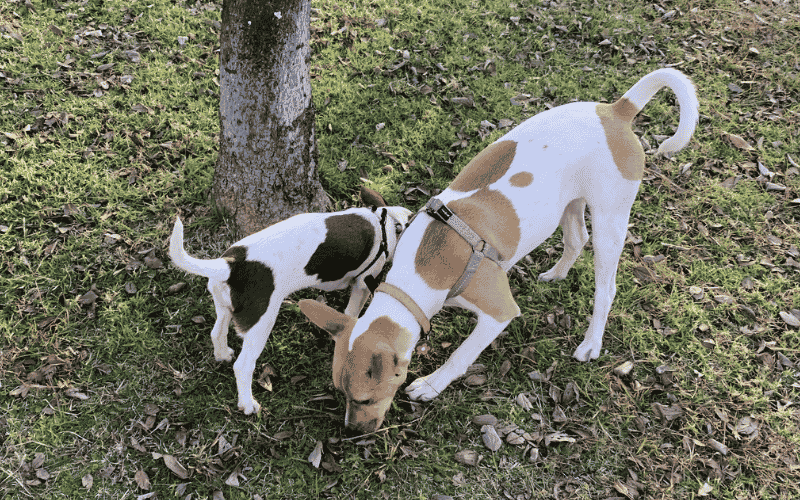
You should let your dog sniff during walks because sniffing provides mental stimulation, helps them relax, allows them to explore, and is an important part of how dogs understand and communicate with the world around them.
A walk doesn’t have to be about covering as much distance as possible. For your dog, the smells along the way are often just as important as the exercise.
Key Takeaways
- Sniffing works a dog’s brain, burning as much energy as physical exercise.
- Investigating scents naturally lowers stress and relaxes overexcited dogs.
- Sniffing lets dogs process their environment and gather information.
- Short, sniff-focused walks are often more rewarding than covering long distances.
I used to get frustrated with Luna and Taner when every walk turned into a series of stops. I thought a good walk meant keeping a steady pace, getting some exercise and coming home tired. If we barely made it down the street because someone had to investigate every bush, lamp post and patch of grass, I felt like we weren’t getting anywhere.
Then I started looking at walks differently.
Instead of treating sniffing as a distraction, I started seeing it as part of the walk. Now, I deliberately give Luna and Taner time to slow down, explore and follow their noses. Our walks have become much more enjoyable, and I’ve learned that sometimes the best walk isn’t the one where we cover the most ground.
What Is a Sniff Walk?
A sniff walk is a slower-paced walk where your dog has plenty of opportunities to stop, sniff and investigate their surroundings.
Unlike an exercise walk, where you may have a route, destination or distance in mind, a sniff walk focuses on exploration. Your dog gets to take their time and investigate the scents that interest them.
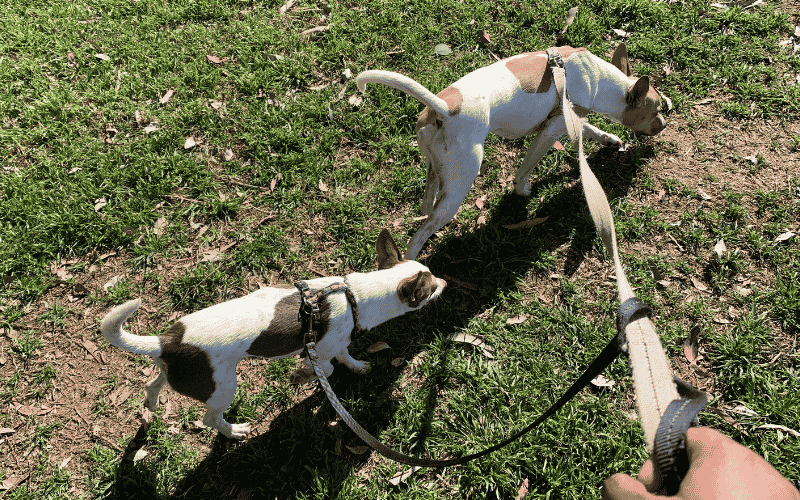
You don’t have to let your dog sniff for the entire walk. You can combine structured walking with periods of free sniffing, depending on where you are, how much time you have and what your dog needs.
The important thing is giving them opportunities to use their nose rather than constantly pulling them away.
Why Do Dogs Sniff So Much on Walks?
Dogs experience the world very differently from us. While humans rely heavily on sight, dogs gather an enormous amount of information through scent.
When your dog stops to sniff a patch of grass, they aren’t simply smelling something because it looks interesting. They may be picking up information left behind by another dog or animal, working out what has recently passed through the area or investigating a completely unfamiliar scent.
Their nose helps them understand what’s happening around them.
This is why the same lamp post can be worth investigating every day. To us, nothing has changed. To your dog, there may be a whole new collection of smells to process.
5 Benefits of Letting Your Dog Sniff
1. Sniffing provides mental stimulation
Sniffing gives your dog’s brain a workout.
Following different scents requires concentration and processing. Your dog is taking in information, working out where smells are coming from and deciding what is worth investigating.
This can be particularly valuable for dogs that need plenty of mental stimulation. It’s also useful for older dogs who may not be able to handle long or strenuous walks.
A slow walk with plenty of sniffing can be surprisingly tiring.
2. It can help your dog relax
Sniffing is a natural, calming activity.
Rather than rushing from one place to another, your dog gets time to stop, investigate and process their surroundings. For dogs that become overexcited during high-energy activities, a slower sniff-focused walk can be a calmer way to spend time outside.
Research cited in the source material suggests that providing dogs with opportunities to sniff may also encourage more positive emotional responses.
3. It gives your dog choice
We make most of the decisions in our dogs’ lives. We decide when they eat, when they go outside, where they walk and when it’s time to come home.
Giving your dog some choice during a walk can be valuable.
Letting them decide which safe scent to investigate and how long to spend exploring gives them some control over their experience.
That doesn’t mean allowing your dog to drag you wherever they want. Good leash manners still matter. The goal is to give your dog freedom within clear boundaries.
4. Sniffing is part of canine communication
Your dog isn’t wasting time when they stop to smell where another dog has been.
Scent plays an important role in canine communication. Dogs can gather information about other animals through the smells they leave behind, including whether another dog has recently passed through an area.
Sniffing is also part of how dogs greet each other. What might seem strange to us is completely normal canine behaviour.
Even sniffing the ground can sometimes be a way for a dog to communicate that they aren’t looking for conflict.
5. It can help prevent boredom
Physical exercise is important, but dogs also need opportunities to use their brains.
A dog that spends every walk marching along the same pavement without being allowed to investigate anything is getting exercise without much opportunity for natural exploration.
Adding sniffing and variety to walks gives your dog something to think about. Mental enrichment can also help reduce boredom and frustration, which can contribute to unwanted behaviours.
Sniff Walks Don’t Have to Replace Exercise
Letting your dog sniff doesn’t mean every walk needs to become a slow, two-hour expedition.
Sometimes you need to get somewhere. Sometimes you’re short on time. You may also need your dog to walk beside you in busy areas, near traffic or when passing other people and dogs.
That’s where balance comes in.
Your dog can learn that there are times when they need to walk with you and times when they’re free to explore.
You can teach a release cue that tells your dog when they’re allowed to sniff and investigate. This allows you to maintain good leash manners while still giving your dog plenty of freedom.
How to Give Your Dog More Sniff Time
You don’t need special equipment or a complicated routine.
Slow down
When you’re somewhere safe, let your dog stop and investigate interesting smells instead of immediately pulling them along.
Give them a little time to finish processing the scent before asking them to move on.
Choose interesting routes
Grass, parks, quiet paths and areas where other animals regularly pass through can offer plenty of scents to investigate.
You don’t need to find somewhere completely new every time. Even a familiar route can become more interesting when your dog is given the opportunity to explore it properly.
Use a longer leash when appropriate
A long line (about 3 to 9 meters) can give your dog more room to move and sniff while keeping them safely attached to you.
Use one only where it is practical and safe, and make sure your dog understands basic leash skills first.
Pay attention to your dog
Put your phone away and watch what your dog is doing.
Does your dog quickly move from one scent to another, or spend several minutes intensely investigating one spot? Paying attention can teach you a lot about what your individual dog enjoys.
Know when to move on
Free sniffing doesn’t mean your dog should investigate absolutely everything.
Redirect them from rubbish, dead animals, dangerous substances or anything they’re trying to eat. Also discourage eating faeces because of the potential exposure to bacteria and parasites.
How Much Sniffing Does Your Dog Need?
There isn’t one amount of sniffing that’s right for every dog.
Your dog’s age, energy level, personality, training and your available time all play a role.
You can add a few uninterrupted sniffing breaks to an ordinary walk. If you have more time, dedicate an entire walk to letting your dog explore at their own pace.
Don’t measure a successful walk only by the distance you’ve covered.
Sometimes, less distance makes for a better walk.
Other Ways to Let Your Dog Use Their Nose
Walks aren’t the only way to encourage natural sniffing behaviour.
You can scatter some of your dog’s kibble across a safe patch of grass and let them forage for it. It’s a simple way to encourage searching and sniffing without spending money on another toy.
On rainy days, a snuffle mat can provide similar enrichment indoors. You can also try scent games, food puzzles or structured nose work.
For dogs that really enjoy using their noses, scent work classes can take things further by teaching them to identify and locate specific scents.
Let Your Dog Sniff
The next time your dog stops for the tenth time in five minutes, try not to see it as a nuisance.
They’re not necessarily being stubborn or trying to hold you up. They’re exploring their surroundings in one of the most natural ways they know.
You don’t have to let your dog dictate every step of every walk. Your safety, their training and your own enjoyment matter too. But there is plenty of room for both structured walking and sniffing.
For me, the biggest change was simply slowing down and giving Luna and Taner permission to enjoy the journey.
Because sometimes the best part of a walk isn’t how far you go—it’s what your dog gets to discover along the way.