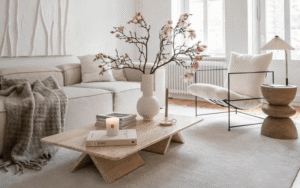
Japandi interior design is a calm, minimalist blend of Japanese and Scandinavian styles that focuses on warmth, craftsmanship, and functionality. It combines clean lines, neutral palettes, and natural materials to create serene, clutter‑free homes that still feel cosy and livable.
Key characteristics
Key traits include clean-lined furniture, neutral and earthy colour palettes, mixed light and dark woods, and a strong use of natural textures like linen, wool, and stone. Spaces are intentionally decluttered, with functional storage, low silhouettes, layered lighting, and touches of greenery to soften hard surfaces.
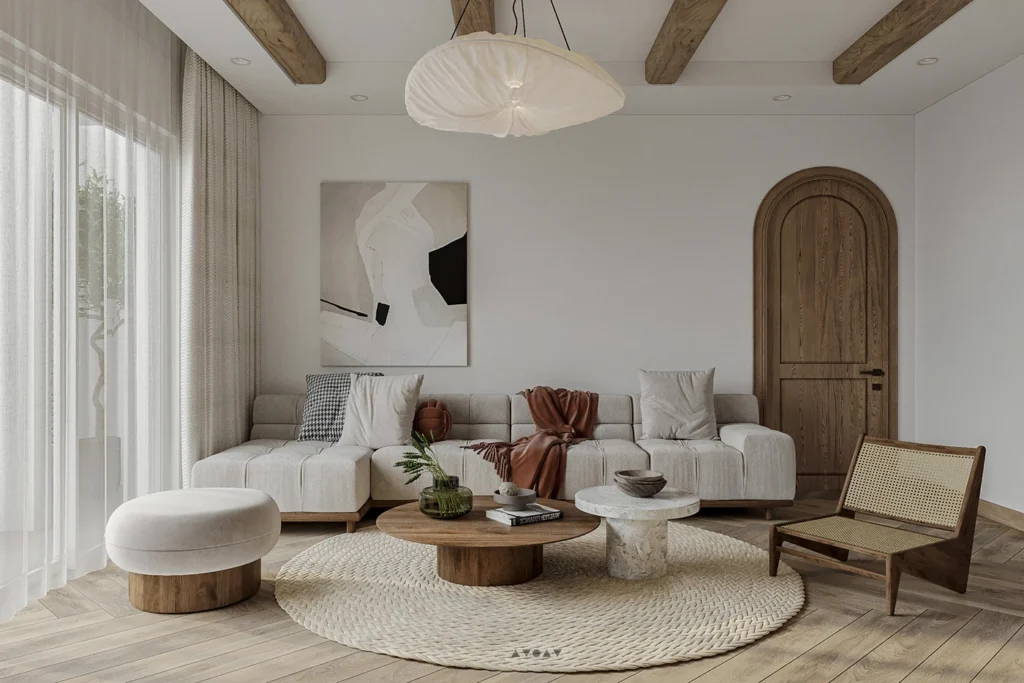
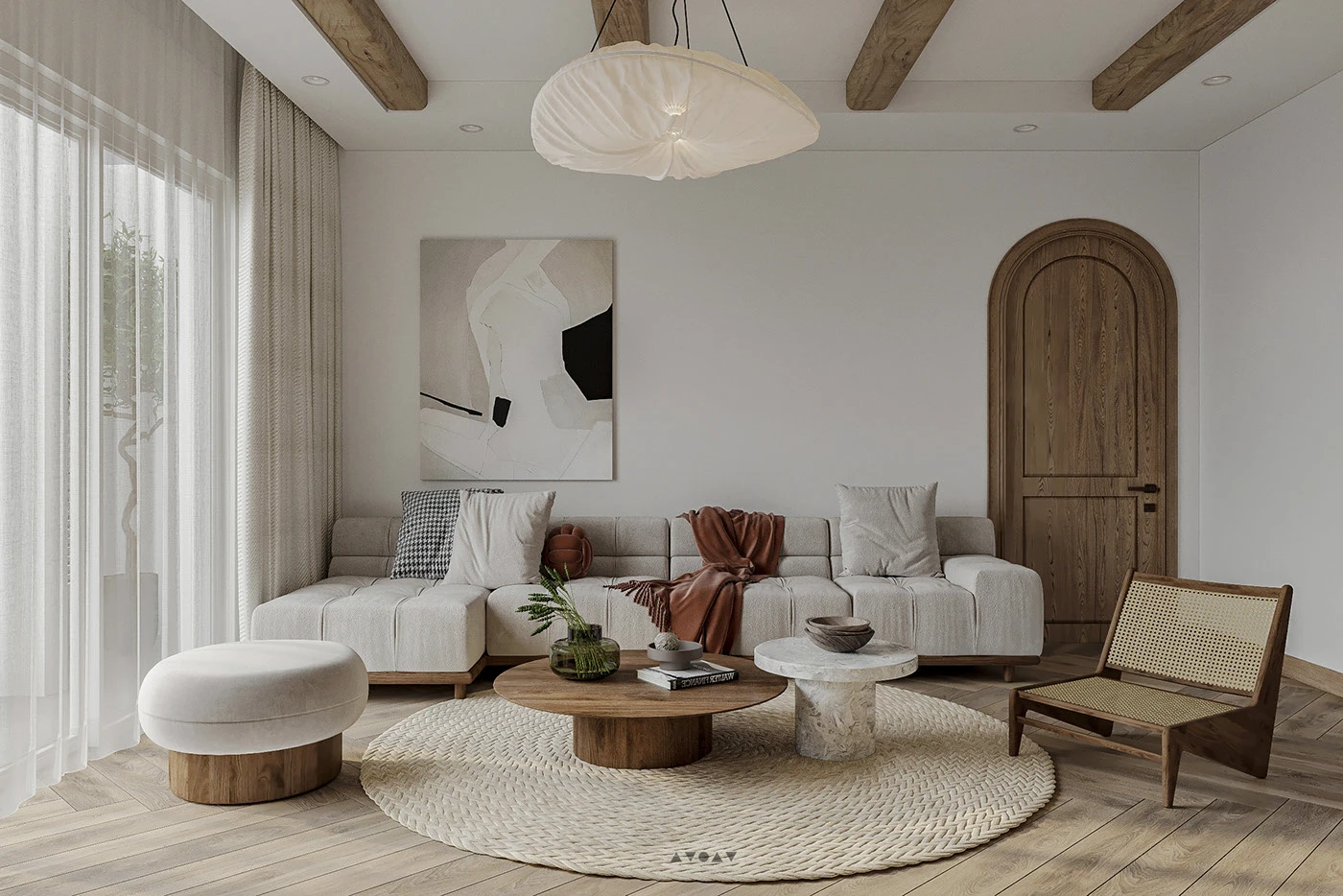
Using this beautifully curated living room as a reference, follow along as we explore how you can recreate this space for your home.
| Design Aspect | Japandi approach |
|---|---|
| Colour palette | Soft neutrals with muted accents |
| Furniture | Low, streamlined, functional pieces |
| Materials | Wood, stone, ceramics, natural fibers |
| Atmosphere | Calm, warm, and uncluttered |
Neutral Foundations & Soft Contrast
Japandi interiors lean into warm whites, beige, greige, soft grey, and gentle earthy tones to establish a calm, restorative base. Choose one dominant neutral for walls and larger furniture, then layer slightly deeper shades through textiles and decor to create depth without visual noise.
A beautifully on-trend option for anchoring a Japandi living space is Pantone Colour of the Year 2026, Cloud Dancer (PANTONE 11-4201) — a light, airy neutral that enhances brightness while maintaining warmth.
To avoid the space feeling flat, Japandi introduces quiet contrast: pale upholstery and walls are balanced by deeper wood tones, darker accents, or understated artwork. Pattern appears sparingly in subtle checks, tweeds, or fine stripes, always kept tone-on-tone so the room remains visually calm yet layered. Pops of muted colour — rust, sage, ochre, or dusty blue — add warmth and personality without disrupting the serenity.
Wabi-Sabi Character & Natural Materials
At the heart of Japandi lies the Japanese philosophy of wabi-sabi — an appreciation for imperfection, patina, and the beauty of ageing materials. Instead of flawless finishes, look for handmade ceramics, textured plaster, and wood with visible knots and grain so the space feels authentic rather than overly polished.
Natural and sustainable materials dominate. Think solid wood, bamboo, rattan, jute, wool, linen, and stone create a tactile, grounded environment that supports a slower, more thoughtful way of decorating. Pair smoother surfaces with rougher textures — stone beside warm timber, chunky knits against crisp linen — to enrich the neutral palette and add visual depth.
Wood appears generously throughout Japandi interiors, from floors and beams to coffee tables, stools, and frames. Mixing pale Scandinavian woods like oak or ash with deeper tones like walnut or stained pine adds richness, provided undertones remain consistent, and each wood tone repeats at least twice to feel intentional. Matte or lightly oiled finishes keep everything relaxed and natural.
Light, Air & Gentle Glow
Natural light is essential. Large windows, sheer curtains, and minimal window dressing allow daylight to flood the room, reinforcing the airy, open feeling. Lightweight fabrics filter sunlight rather than blocking it, softening the atmosphere throughout the day.
Lighting is layered rather than relying on a single overhead source. Soft ceiling lights, table lamps, floor lamps, and candles work together to create a warm, adaptable glow for both quiet mornings and slow evenings.
Fixtures in paper, linen, wood, or rattan diffuse light beautifully, while rice paper–inspired pendants add sculptural softness and a cloud-like ambience. Warm, gauzy window coverings further enhance the cocooning yet breathable mood.
Timeless Furniture & Thoughtful Layout
Furniture should feel classic rather than trend-driven: low-profile sofas, simple armchairs, and gently rounded tables create a grounded, enduring look. Prioritise quality construction, comfortable proportions, and materials that age gracefully so pieces remain relevant for years.
Sofas tend to sit low and streamlined, emphasising horizontal lines and relaxation. Woven accent chairs in rattan, cane, or paper cord introduce craftsmanship and texture without adding visual weight.
Layouts remain free-flowing and intuitive, supporting easy movement and conversation. Seating is arranged in simple groupings around a central table, with clear pathways to windows and doors. Negative space is treated as a design element — allowing furniture and art to breathe rather than crowding every surface.
Calm Styling & Visual Breathing Room
Japandi styling is deliberate and restrained. Coffee tables hold only a few carefully chosen objects, perhaps a vase, a tray, or a small stack of books — while hidden storage keeps clutter out of sight. Large-scale abstract art replaces busy gallery walls, favouring soft shapes and limited colour palettes for visual clarity.
Quality always outweighs quantity. Each piece serves a purpose and carries visual weight, whether it’s a handcrafted bowl or a sculptural lamp. Empty floor and wall areas provide balance, creating a gallery-like calm that keeps the room feeling open and refined.
Texture, Comfort & Subtle Warmth
Minimalism never feels cold in Japandi spaces. Soft throws, plush cushions, and tactile rugs in wool, jute, or braided cotton add warmth and comfort while anchoring the room. Layering different textures ensures the space feels welcoming rather than austere.
Greenery completes the connection to nature. Sculptural plants or a single leafy stem in a simple ceramic or glass vessel introduce gentle colour and life without visual clutter.
Above all, Japandi embraces simplicity and restraint. The goal is not perfection, but balance — a home that feels curated yet relaxed, calm yet warm, minimal yet deeply livable.