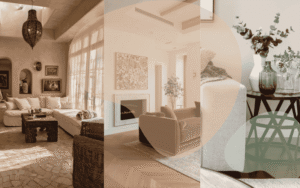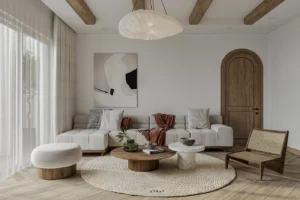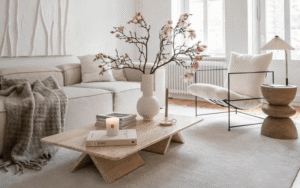

Biophilic interior design is a design approach that intentionally reconnects people with nature inside their homes. It integrates natural elements into indoor spaces to enhance human well-being and connection to nature. This design approach reduces stress and boosts mood by mimicking the outdoors.
The featured room below demonstrates this perfectly: sunlight floods the space, lush greenery becomes a focal point, warm woods soften the architecture, and natural textures create visual and tactile warmth.

How to achieve this look in your own home
Natural Light
Natural light is the foundation of biophilic design. Sunlight regulates our circadian rhythm, boosts mood, and enhances spatial comfort. In this space, large glass doors and partitions allow daylight to flow freely between rooms, eliminating dark corners and creating visual continuity with the outdoors.
How to use it at home:
- Maximise window exposure by keeping window treatments light and sheer.
- Use mirrors to reflect light deeper into rooms and layer with warm lamps mimicking sunlight.
- Avoid heavy, dark furnishings that absorb light.
The goal is to allow sunlight to become an active design element rather than something blocked or controlled too heavily.
Plants and Greenery
Living plants are one of the most powerful biophilic elements. They improve air quality, reduce stress, and instantly bring vitality into a room.
Here, a large statement plant anchors the dining area, creating a visual connection to nature while softening the modern architecture.
How to use it at home:
- Incorporate a mix of large floor plants, tabletop greenery, and trailing plants.
- Choose low-maintenance options, such as fiddle-leaf figs, monstera, snake plants, or palms.
- Group plants together to create lush, layered moments rather than scattering single pots.
- Use natural planters such as clay, ceramic, woven baskets, or stone.
Plants should feel integrated into the design, not like an afterthought.
Natural Materials
Biophilic interiors rely heavily on authentic, tactile materials that age beautifully and promote a grounded feel.
This room showcases warm timber furniture, woven textures, and soft textiles that balance the sleek black framing and glass elements.
How to use it at home:
- Prioritise wood, rattan, cane, linen, wool, cotton, leather, clay, and stone.
- Choose furniture with visible grain and natural finishes rather than high-gloss surfaces.
- Layer textures through rugs, cushions, upholstery, and wall décor.
- Avoid excessive synthetic materials where possible. Opt for reclaimed or sustainable options like cork flooring or bamboo accents.
Natural materials create warmth, authenticity, and sensory richness.
Natural Shapes and Patterns
Biophilic spaces move away from rigid geometry and embrace organic curves, soft edges, and irregular forms inspired by nature.
In this interior, the rounded pendant light, curved chair silhouette, woven textures, and abstract nature-inspired wall prints create a sense of softness and flow.
How to use it at home:
- Choose furniture with rounded corners or sculptural curves.
- Incorporate organic patterns in textiles, rugs, and artwork.
- Use natural grain patterns in wood and stone as decorative features.
- Avoid overly sharp, angular layouts where possible.
These forms feel more intuitive and comforting to the human eye.
Nature-Inspired Colours
The colour palette in this space reflects earthy neutrals, we have warm beige walls, natural wood tones, soft greenery, and muted blacks for contrast. This creates a calm, balanced atmosphere that mirrors outdoor environments.
How to use it at home:
- Base your palette on greens, warm neutrals, sand, clay, stone, soft browns, and muted blues.
- Layer tones rather than relying on stark contrasts.
- Use darker shades sparingly for grounding and structure.
- Let natural materials bring colour variation organically.
Nature-inspired palettes reduce visual noise and support relaxation.
Sensory Experiences
True biophilic design engages more than just sight, it stimulates all the senses. Engage touch with textured fabrics, scent via aromatic plants, and sound through rustling leaves or fans simulating breezes.
In this space, tactile materials invite touch, daylight creates shifting shadows throughout the day, plants introduce subtle fragrance and humidity, and soft furnishings absorb sound for acoustic comfort.
How to use it at home:
- Add textured fabrics, woven rugs, and natural finishes for tactile interest.
- Introduce gentle natural scents using plants, essential oils, or natural candles.
- Improve acoustics with soft furnishings, curtains, and layered textiles.
- Allow airflow and temperature variation where possible through operable windows or indoor plants.
A well-designed biophilic home should feel calming, immersive, and emotionally grounding.