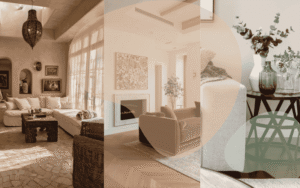
Minimalist interior design is about intentional living, creating spaces that feel calm, functional, and visually effortless by stripping away excess and focusing only on what truly matters. Instead of filling a room with decor, minimalism celebrates space, light, texture, and craftsmanship. Every piece serves a purpose while contributing to a balanced, peaceful atmosphere.

Our feature room embodies minimalism through its airy layout, soft neutrals, clean silhouettes, and thoughtful use of natural materials. It feels warm and inviting rather than cold or sterile. Indeed, minimalism can still feel layered and lived-in.
Let’s break down the key principles and how you can apply them at home.
Simplicity & Function
Minimalism leans on the idea that form follows function. Each piece of furniture and decor should serve a clear purpose while contributing to the overall harmony of the space.
In our inspo image, the low-profile sofa, simple coffee table, and streamlined chair create an uncluttered flow. There are no unnecessary accessories; just a few carefully chosen items, such as books, a candle, and a sculptural vase with branches.
How to use it at home:
- Your furniture should support your lifestyle, not just aesthetics.
- Remove items that don’t add function or meaning.
- Keep surfaces mostly clear to allow the room to breathe.
- Opt for multi-purpose furniture where possible (storage ottomans, nesting tables, modular seating).
Minimalism isn’t about having less for the sake of it; it’s about having only what you need and love.
Clean Lines
Minimalist spaces rely on simple shapes, straight lines, and uncluttered silhouettes. Opt for furniture and architecture with straight, unadorned lines to promote order and openness.
In this living room, the sofa, coffee table, wall art, and chair all feature clean geometry and balanced proportions. Even the pendant light has a sculptural yet refined shape that adds visual interest without overwhelming the space.
How to use it at home:
- Choose furniture with slim frames and simple profiles.
- Avoid heavy carvings, excessive ornamentation, or busy patterns.
- Keep wall decor minimal; one statement piece often works better than multiple small artworks.
- Maintain visual consistency across finishes and shapes.
Clean lines create a sense of order, making spaces feel calm and expansive.
Neutral Palette
Minimalism thrives on a soft, neutral colour palette, think whites, creams, warm greys, beige, taupe, and muted natural tones. These shades create a timeless base while allowing texture and light to become the focal points.
Our living room has layers of whites and warm neutrals that feel soothing rather than flat. Subtle contrast comes from wood tones, textiles, and soft shadows rather than bold colours.
How to use it at home:
- Use one dominant neutral for walls and large furniture.
- Layer similar tones through rugs, cushions, throws, and curtains for depth.
- Introduce warmth with natural materials like wood, linen, wool, or stone.
- If adding colour, keep it muted and intentional; soft clay, sage, or sand tones work beautifully.
Neutral palettes help spaces feel larger, brighter, and effortlessly cohesive.
Natural Light
Light is one of the most powerful design elements in most of the interior design styles, if not all; minimalism is no exception. Large windows, sheer curtains, and reflective surfaces allow daylight to flood the space, creating a fresh, open atmosphere.
In our living space, sunlight enhances the softness of the colour palette and highlights textures on the walls, textiles, and wood surfaces, adding depth without visual clutter.
How to use it at home:
- Keep window treatments light and breathable.
- Avoid blocking windows with bulky furniture.
- Use mirrors strategically to reflect natural light.
- Choose light-toned flooring and wall finishes to amplify brightness.
- Layer soft ambient lighting for evenings to maintain warmth.
Natural light reinforces the sense of calm and openness that defines minimalist interiors.
Quality Over Quantity
An absolute anchor to this design style. Invest in fewer, high-quality pieces that endure the test of time, not just physical structure; they must be timeless, surviving the fleeting trends and fads.
How to use it at home:
- Start at home by auditing your possessions, replacing multiples with premium items and keeping items that add uniqueness to your space.
- Invest in well-made furniture that will age beautifully.
- Choose natural materials that develop character over time.
- Avoid impulse decor purchases.
- Focus on craftsmanship, texture, and longevity rather than trends.
This approach creates spaces that feel refined, sustainable, and emotionally grounding.