Key Takeaways
- Regular enrichment can help reduce boredom-related behaviours such as chewing, barking and digging.
- The best enrichment matches your dog’s abilities without leaving them frustrated or overwhelmed.
- Always supervise new toys and DIY activities and remove anything that becomes damaged.
It’s been almost six years since Luna and Taner came into my life, and I’ve learned that keeping dogs happy involves a lot more than walks and treats.
Over the years, our routine has shifted from focusing mainly on physical exercise to giving them more opportunities to sniff, explore, solve problems, learn and make choices.
That change has made a noticeable difference. Enrichment gives dogs something to think about and helps channel their natural behaviours into activities we actually want them doing.
Enrichment works for every dog, from high-energy terriers and working breeds to seniors and puppies. It can be as simple as hiding treats around the house or giving your dog extra time to sniff on a walk.
The key is to find activities that suit your dog’s age, personality, abilities and energy level.
The Link Between Boredom and Behavioural Issues
A bored dog can quickly find their own entertainment. Unfortunately, their idea of fun may involve chewing the furniture, barking at every sound or digging up the garden.
When dogs don’t have enough mental stimulation, they still need an outlet for their energy and instincts. Destructive behaviour is often the result.
It’s not your dog being spiteful. They’re finding something to do.
Enrichment gives them a better outlet.
Instead of trying to stop every unwanted behaviour, look at what your dog could be doing instead. Give them something to sniff, search for, chew, learn or work out.
At the same time, pay attention to their limits. More enrichment isn’t always better. If your dog becomes tired, frustrated or loses interest, give them a break.
Indoor Dog Enrichment Ideas
You don’t need a huge garden or a house full of expensive dog toys to provide enrichment.
Your home can offer plenty of opportunities for sniffing, searching, playing and learning, especially on days when the weather keeps you indoors.
DIY Snuffle Mats and Scent Games
I learned pretty quickly that you don’t need expensive equipment to keep my two occupied.
A DIY snuffle mat is one of the easiest ways to get your dog to use their nose. You can make one by tying strips of fleece through a rubber sink mat, then hiding dry treats or kibble between the strips.
Once your dog gets the hang of it, let them work out where the food is rather than showing them every piece.
Sniffing takes concentration, and for terriers like Luna and Taner, getting to use their noses feels like real work.
You can also create simple scent games by hiding treats around one room and letting your dog search for them.
Hide and Seek with Favourite Toys
This is one of those games that costs nothing. Ask your dog to stay in one room while you hide their favourite toy somewhere else. Then give them a cue such as “find it” and let them search.
Start with easy hiding places. Once your dog understands the game, make the hiding spots a little more difficult.
If they lose interest, change the toy or location. The goal is to keep the game interesting, not frustrating.
Using Puzzle Feeders for Mealtime
Turn mealtime into enrichment by swapping the standard bowl for a puzzle feeder. They come in varying difficulty levels. They range from slow feeding bowls to challenging puzzle toys.
Slow-feeding bowls have raised ridges or sections that make dogs slow down while eating.
For something more challenging, dog puzzle toys require dogs to nudge, slide, lift or flip parts of the toy to reach a hidden reward.
Start with something your dog can figure out fairly quickly. If a puzzle is too difficult, they may simply give up.
Outdoor Enrichment Activities to Keep Your Dog Active
Going outside isn’t only about getting your dog tired.
The outdoors gives them new smells, sounds, textures and things to investigate. Even an ordinary walk can become an enrichment activity when you give your dog more freedom to explore safely.
Learn more about bonding with your dog through everyday activities.
Decompression Walks or Sniffing Safaris
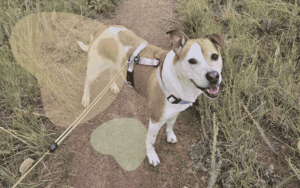
Sniffing safaris are some of our favourite walks. Instead of sticking to the standard short leash, we use our 3-metre leads, which give Luna and Taner more freedom to wander, investigate and follow their noses while still keeping me in control.
Unlike a walk focused on distance, pace or perfect leash manners, a decompression walk is about giving your dog space to slow down and explore.
We let them stop and sniff, investigate interesting scents and choose where they want to explore within the boundaries of a safe environment.
It’s a simple change, but it makes a big difference. By the time we head home, they’ve had the chance to use their noses, explore their surroundings and work their brains as well as their bodies.
Garden Agility Courses
You don’t need professional agility equipment to give your dog a fun obstacle course at home. We use what we already have around the garden to create simple challenges that get Luna and Taner moving, thinking and paying attention to me.
Try:
- Broomsticks secured on low supports for gentle hurdles.
- A sturdy cardboard box or play tunnel to run through.
- Plastic garden stakes or cones for weaving.
- A flat board secured on a low, stable surface for balance work.
Keep everything low, stable and easy to navigate, especially when you’re starting.
For us, these little DIY courses are less about agility and more about giving Luna and Taner an outlet for their energy while working their brains.
Teaching New Tricks in Different Environments
Dogs don’t automatically understand that a behaviour learned in your living room also applies everywhere else.
Practice familiar cues in different places so your dog learns to focus despite distractions.
Start somewhere quiet, such as your living room or garden. Once your dog understands the behaviour, gradually move to places with more distractions.
For example, practise sit and stay at home before moving to the garden, a quiet outdoor space and eventually busier environments.
There’s no need to rush. Give your dog time to succeed before increasing the difficulty.
Sensory Enrichment for Calm and Focus
Enrichment doesn’t always have to be loud, energetic or physically demanding.
Sometimes the best activity is something calm that allows your dog to take in their surroundings.
Sensory enrichment can involve sound, sight and touch. These activities are especially useful when you want to give your dog something to do without winding them up further.
Calming Sounds
Playing calm music or white noise can help mask sudden sounds such as traffic, thunderstorms, or people moving around outside.
If your dog responds well to it, consistent background sounds can also become part of their wind-down routine.
Visual Enrichment Through Window Watching
Sometimes your dog doesn’t need to be running around to be engaged.
A comfortable spot near a window can give them something to watch while they relax. They might watch birds, people walking past or activity in the garden.
Of course, this depends on the individual dog. If window watching causes constant barking or leaves your dog worked up, it may be better to limit access.
The aim is calm observation, not turning the window into a 24-hour neighbourhood watch station.
Tactile Experiences with Different Textures
Dogs experience the world through their paws and bodies, too.
You can introduce different textures into everyday activities, such as:
- Soft blankets
- Cool floors
- Textured mats
- Grass
- Sand
- Safe gravel surfaces
You don’t need to create a complicated sensory setup. Simply allowing your dog to experience different surfaces during a walk can provide plenty of new information for them to process.
Pair this with relaxed sniffing and exploration, and a normal outing becomes much more interesting.
Social Enrichment
Dogs also need positive social experiences. Learn more about how to socialise your dog.Social enrichment doesn’t mean your dog needs to greet every dog or person they see. For some dogs, too much interaction can be overwhelming.
The goal is to give your dog positive experiences while respecting their personality and boundaries.
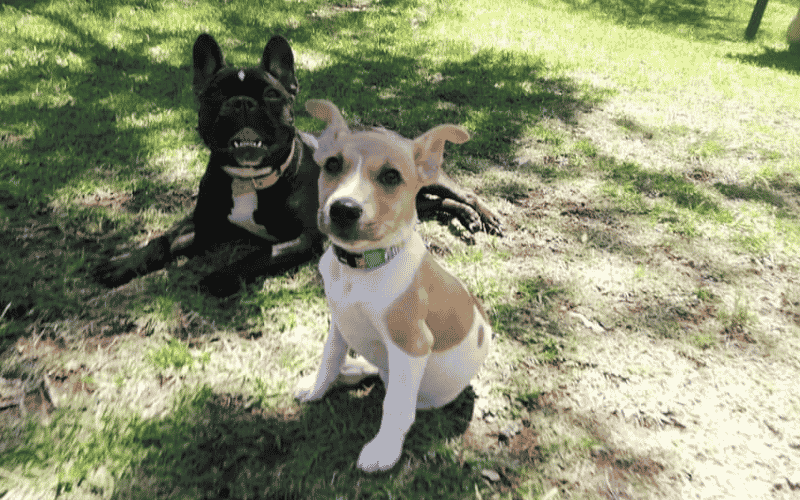
Playdates, Training Classes and Dog-Friendly Outings
Playdates work best when both dogs have compatible energy levels and play styles. Choose a dog your pet already knows or one that you know is comfortable around other dogs.
Training classes provide another type of social enrichment. Your dog gets to work around people and other dogs while learning to focus on you.
Dog-friendly parks and cafes can also introduce your dog to new sights, smells and sounds. Keep outings short at first and pay attention to their body language.
A few useful rules:
- Keep first visits short.
- Bring high-value treats for rewarding calm behaviour.
- Give other dogs and people plenty of space.
- Don’t force greetings.
- Leave if your dog becomes overwhelmed.
Tailor Enrichment to Your Dog’s Breed and Age
There is no single enrichment routine that works for every dog.
A young Jack Russell with endless energy will have different needs from a senior dog with stiff joints. A food-obsessed Labrador may love a puzzle feeder, while another dog might prefer scent work or a game of tug.
Individualised enrichment should take your dog’s age, personality, breed and abilities into account.
Think about your dog’s:
- Age
- Breed and instincts
- Energy level
- Physical abilities
- Confidence
- Food motivation
- Play preferences
- Attention span
Activities for High-Drive Working Breeds
Working breeds often enjoy having a job to do.
Dogs such as Border Collies and German Shepherds can benefit from activities that give them something to focus on, including scent work, retrieving, training and more challenging problem-solving games.
High-drive dogs don’t necessarily need endless physical exercise. Giving them appropriate mental work can also help channel their energy.
The same applies to my terrier mixes. Luna and Taner can run around the garden all day, but they also need opportunities to sniff, search and figure things out.
Gentle Enrichment Options for Senior Dogs
Older dogs may not be able to handle the same physical activities they enjoyed when they were younger.
That doesn’t mean enrichment has to disappear.
Try:
- Simple nose-work games
- Short, relaxed walks
- Easy food puzzles
- Gentle training
- Different textures
- Calm sensory activities
Watch your dog closely and stop if they appear tired or uncomfortable.
The goal is to keep them involved without asking their bodies to do more than they comfortably can.
Engaging Puppies Without Overstimulation
Puppies are curious, but more activity isn’t always better.
They need plenty of sleep and downtime between their adventures.
Keep enrichment sessions short and positive. Introduce new sounds, surfaces, people and environments gradually rather than throwing everything at them at once.
Training can be as simple as practising a few basic behaviours, exploring a new safe area or encouraging your puppy to investigate a new texture.
Give them time to process each new experience.
Common Mistakes to Avoid When Using Enrichment
Enrichment should make your dog’s life more interesting, not more stressful.
It’s easy to get carried away when you discover a new toy or activity, but your dog’s response should always guide you.
Overloading Your Dog with Too Many Tasks
You don’t need to fill every spare minute with enrichment.
Too many puzzles, training sessions and new experiences in one day can leave your dog mentally exhausted.
If your dog seems frustrated, loses interest or starts avoiding the activity, take a break.
With interactive toys, introduce one new item at a time. That makes it easier to see whether your dog actually enjoys it and whether they can use it safely.
Choosing Toys That Pose Choking Hazards
Safety needs to come before fun.
DIY enrichment can be inexpensive and effective, but household objects aren’t automatically safe just because they’re easy to find.
Check anything you use for:
- Small pieces that could be swallowed
- Loose parts
- Sharp edges
- Frayed strings
- Cracks
- Pieces that can break off
- Materials your dog can easily destroy and swallow
Supervise your dog when introducing a new toy or homemade activity.
A toy that is safe for one dog may not be safe for another, particularly if you have a strong chewer.
Inspect toys regularly and throw away anything that is damaged.
Ignoring Signs of Frustration or Fatigue
Your dog will tell you when they’ve had enough. You just need to pay attention.
Learning to read your dog’s body language makes it much easier to tell when an activity is becoming too much.
Pacing, whining, repeatedly walking away or losing interest can all be signs that your dog needs a break.
Don’t keep pushing because you want them to finish the puzzle.
Put the activity away and try another day, or switch to something easier.
Enrichment should leave your dog feeling satisfied, not frustrated.
Make Enrichment Part of Everyday Life
You don’t need a complicated schedule or a cupboard full of toys to enrich your dog’s life.
Use what you already have.
Scatter some of their kibble around the garden. Hide a favourite toy behind a piece of furniture. Spend ten extra minutes letting them sniff on a walk. Practise a few commands in a new location. Give them a puzzle feeder instead of their usual bowl.
These small changes add up.
For Luna and Taner, enrichment has become part of everyday life rather than a separate activity I have to plan hours for.
And that’s probably the biggest lesson I’ve learned: good enrichment doesn’t have to be complicated. It just needs to give your dog an appropriate opportunity to use their brain, body or natural instincts.
Start with one activity your dog enjoys and build from there