The Home Gardens (Blog) is reader-supported. When you buy through links on this page, we may earn an affiliate commission at no additional cost to you.
Key Takeaways
- Patience and reward-based training deliver the best long-term results.
- Prioritise your dog’s medical wellness; many sudden behavioural changes are tied to hidden pain or illness.
- Small, daily changes in mental stimulation and routine drastically reduce destructive habits.
- Complex issues like severe anxiety or aggression require immediate management and professional guidance.
Dealing with your dog’s quirks can feel overwhelming at times. I want you to know that you are definitely not alone. We have all been there, feeling a bit frazzled when our dogs act out unexpectedly. In fact, a growing body of research suggests that behaviour challenges are far more common than most people realise.
One recent study from Texas A&M University, analysing data from more than 43,500 dogs, found that over 99% of dogs display at least one moderately serious or serious behavioural issue, with separation and attachment behaviours (85.9%), aggression (55.6%), and fear and anxiety (49.9%) topping the list.
The good news is that behaviour problems are manageable when you understand the root causes. Positive reinforcement training, consistent routines, and professional support when needed can lead to meaningful improvement.
How Instinct and Environment Impact Dog Behaviour Problems
Many behaviours we label as “bad” are simply natural dog instincts showing up in a human environment. Chasing, digging, and chewing are deeply rooted in predatory, foraging, or social drives. According to the American Society for the Prevention of Cruelty to Animals (ASPCA), recognising these behaviours as instinctual allows us to provide appropriate outlets rather than relying on ineffective punishments.
The environment strongly shapes how and when those instincts appear. An understimulated dog will often invent their own “jobs”—which usually involve destructive behaviours. Conversely, a well-exercised and mentally engaged dog shows far fewer behavioural issues. Simple environmental adjustments, such as structured play, sniffing walks, and puzzle feeders, can prevent many problems before they start.
Identifying the Root Cause of Misbehaviour
Whenever a behaviour changes suddenly or a problem seems to come out of nowhere, a veterinary checkup should be your first step. Pain, illness, neurological conditions, and even sensory decline can trigger or exacerbate behaviours such as house-soiling, aggression, or nighttime vocalisation.
For example, a dog that suddenly starts growling when touched may be in pain, and a previously housetrained dog having accidents may have a urinary tract infection. Around 60% of dogs show stress and fearful behaviour during veterinary visits, which underscores the importance of discussing behaviour openly with your vet.
Excessive Barking
Barking is a natural form of dog communication, but it becomes a problem when it turns chronic. Dogs bark for many reasons: to greet, to alert, to demand attention, or out of boredom, fear, or separation anxiety.
Teaching a clear “quiet” cue helps most dogs learn to stop barking on command. Use short, frequent training sessions and immediate rewards so your dog connects the cue with calm behaviour.
Address the root cause. If your dog barks at passersby, try managing the environment by closing the curtains or using white noise to reduce outside distractions. For boredom, increase exercise and enrichment. If it’s fear, gradual desensitisation (pairing the trigger with high-value treats) can help change your dog’s emotional response. The AKC recommends desensitisation and counterconditioning to alter emotional responses from negative to positive or from out-of-control excitement to calm.
Also, increase daily enrichment. A tired, mentally stimulated dog barks less. Add daily walks, structured play, or short training games before times when barking typically occurs.
Chewing
Chewing is a natural behaviour for dogs. Puppies chew to relieve teething discomfort, and adult dogs chew to release boredom, frustration, or anxiety. Destructive chewing in adult dogs can also be triggered by changes in routine, such as a new work schedule that leaves the dog alone for longer periods.
Redirecting Destructive Chewing
- Provide safe, appealing alternatives. Durable rubber toys, puzzle feeders, and stuffed KONG toys filled with xylitol-free peanut butter or wet food—and frozen for longer-lasting engagement—give dogs a safe and appropriate outlet for their energy and chewing instincts.
- Manage the environment. Remove tempting items (shoes, remote controls, cushions) from your dog’s reach, especially when you cannot supervise.
- Rotate toys. Keep a set of toys in rotation and swap them out weekly to maintain novelty and interest.
- Rule out separation anxiety. If chewing happens only when you leave and is accompanied by pacing, drooling, or escape attempts, it may be a sign of separation-related distress rather than simple boredom.
Digging
Digging is a natural behaviour for many breeds — rather than trying to eliminate it entirely, give your dog a designated place to dig. A digging zone protects your garden and lets your dog satisfy that instinct safely. Set up a sandbox or a loose soil area in your yard. Encourage them to dig there by burying toys or treats. With guidance, they’ll learn it’s their special spot, keeping your lawn safe!
Chasing
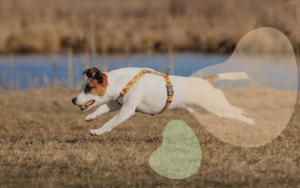
Chasing is a deeply ingrained predatory drive in many dogs. While you cannot erase the instinct, you can manage triggers and significantly reduce risk. Use a sturdy leash and secure harness on walks, avoid high-trigger routes when actively working on recall training, and maintain predictable routines so your dog knows what to expect.
Reinforcing Reliable Recall
Dog Recall (“come” when called) is the single most important safety skill for any dog. Research on undesirable behaviours in young dogs consistently finds that poor recall is one of the most commonly reported problems across all ages.
Inappropriate Elimination
Accidents in the house can be behavioural, but always rule out medical causes first. Sudden house-soiling, changes in frequency or volume, straining, blood in urine, or excessive thirst warrant an immediate veterinary visit. According to a large-scale study using Dog Ageing Project data, house-soiling was reported in approximately 4.1% of dogs. While less common than barking or aggression, it can be one of the most frustrating problems for owners.
Older dogs need consistent behaviour modification to change bad habits. We use positive reinforcement to encourage good behaviour. With patience and gentle guidance, you can solve elimination problems and bring peace back to your home.
Separation Anxiety
Separation anxiety typically presents as vocalisation, pacing, destructive behaviour, drooling, or escape attempts when a dog is left alone. Early warning signs include intense whining when you prepare to leave, following you obsessively from room to room, or repeated accidents during periods of solitude.
Desensitisation — gradual, systematic exposure to departure cues and absences — is an evidence-based approach recommended by veterinary behaviourists to help dogs build tolerance. Progress at your dog’s pace; depending on severity, meaningful improvement may take several weeks to months.
Begging
Begging at the table is almost entirely an owner-maintained behaviour. If begging (staring, whining, pawing) occasionally produces a scrap of food, it will continue and even intensify because intermittent rewards are highly reinforcing.
How to stop dog begging
- Before mealtime, set up a comfortable spot for your dog—a mat, bed, or crate.
- Give a pre-meal activity, such as a puzzle feeder or stuffed chew 5–10 minutes before you sit down.
- Enforce a consistent rule: everyone at the table must ignore begging. No eye contact, no talking to the dog, no pushing food away (which can still be perceived as attention).
- Reward calm behaviour: when your dog lies quietly on their mat, mark and reward at intervals.
- If the behaviour persists, increase the value of the alternative (a better chew, a longer-lasting puzzle) and practice rewarding a “place” or “mat” cue away from the table.
Jumping
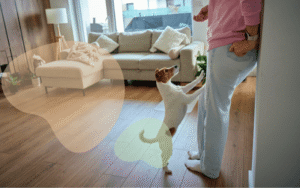
Dogs jump up to greet people because the behaviour has worked before; attention, even negative attention, is still attention. The goal is to teach your dog that calm, four-paws-on-the-floor behaviour is the only way to earn a reward.
How to stop your dog from jumping
Step-by-step plan for the whole household:
- When your dog jumps, everyone turns away, crosses their arms, and avoids eye contact or pushes the dog down. No talking, no pushing, no laughing.
- The instant all four paws are on the floor, mark the behaviour and deliver a calm reward.
- For visitors, especially children or elderly guests, manage greetings by having your dog on a short leash or behind a baby gate until the behaviour is reliable.
- Most dogs show measurable improvement within a few days when the rule is enforced consistently across all people and situations.
Biting and Aggression
Biting and aggression should be treated seriously. When a dog displays aggressive behaviour, the immediate priority is the safety of people and other animals. Understanding why the behaviour is happening is the essential next step.
Dogs almost always give warning signals before biting. These include subtle signs like yawning, lip licking, turning the head away, or walking away, escalating to more obvious signs such as a stiff body, direct stare, growling, snarling, and snapping. These are not moral failings — they are forms of communication signalling that something is wrong, it could be fear, pain, resource guarding, or past trauma.