The Home Gardens (Blog) is reader-supported. When you buy through links on this page, we may earn an affiliate commission at no additional cost to you.
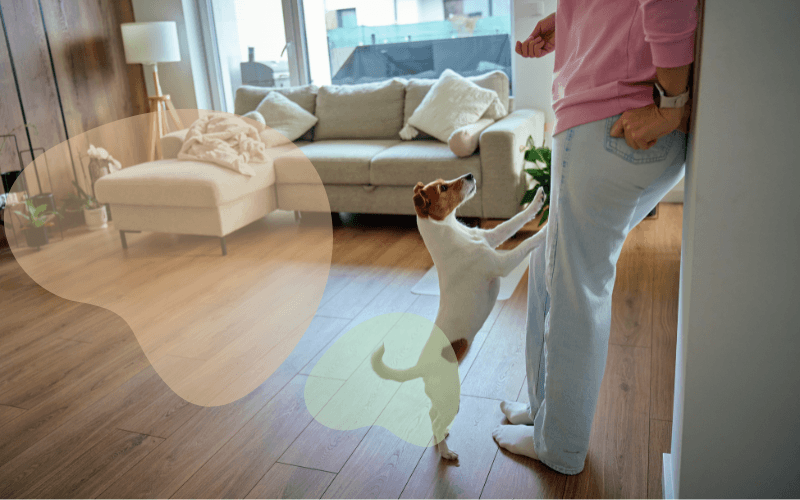
It’s really frustrating when your dog greets guests by jumping up. This is a common problem, but we can solve it together. We’ll use proven methods that I’ve tried myself. With a bit of patience, you can take back your front door and handle those excited greetings.
Knowing why your dog jumps up can help you teach them better manners.
Key Takeaways
- Understand the root cause of excited greeting behaviours.
- Use consistent, positive reinforcement to encourage calm manners.
- Manage the environment to prevent unwanted habits from forming.
- Teach your pet a reliable alternative behaviour like sitting.
- Maintain patience while your furry friend learns new social skills.
Understanding why your dog jumps on people
To fix the jumping habit, we must see things from our dog’s point of view. Jumping off our legs can be frustrating, but it’s often just a natural behaviour.
The psychology of canine greetings
In the wild, dogs greet by sniffing and licking faces. When they jump up, they’re trying to get close to say hello. It’s an instinct that shows their need for connection.
Our faces are central to their world. Jumping is not about being rude; it’s about getting closer. This understanding helps us be patient when changing their behaviour.
Identifying attention-seeking behaviour
Sometimes, jumping is about getting a reaction. If you’ve ever pushed them away or shouted “no,” you might have given them attention. Even negative attention is attention to a dog seeking your focus. If your dog gets attention for jumping, they’ll keep doing it. Our reactions shape their future actions. We must be careful with how we respond.
Recognising excitement versus dominance
Many think a jumping dog is trying to be “dominant.” But most of the time, it’s just excitement. They’re happy to see you and can’t control their jumping. True social skills for dogs mean learning to manage their energy politely. By teaching calm, consistent training, we show them they don’t need to jump to get love. Good behaviour modification teaches them to express joy in better ways.
How to stop your dog from jumping up using positive reinforcement
Positive reinforcement training is the best way to change how your dog greets people. Instead of focusing on what we want them to stop doing, we teach them what we want them to do instead. These simple dog training tips can turn a chaotic greeting into a calm, happy moment for everyone.
Positive reinforcement training
The power of ignoring the behaviour
When your dog jumps up, they are often looking for attention. Even if that attention is you pushing them away or saying “no.” To learn how to stop jumping, you must become a bit of a statue. By turning your back and folding your arms, you remove the reward they are seeking.
It might feel strange at first, but ignoring the behaviour is incredibly effective. Once your dog realises that jumping makes you disappear, they will quickly look for a better way to get your attention.
Rewarding four on the floor
The moment your dog’s paws hit the ground, you should immediately offer praise or a treat. This is a core part of dog obedience basics that helps your pup understand the rules of the game. We want to make sure they know that keeping all four paws on the floor is the secret key to getting what they want.
Consistency is your best friend here. If you reward them every single time they stand calmly, they will start to choose that behaviour naturally. It builds a wonderful sense of trust between you and your furry companion.
Timing your treats for maximum impact
Using reward-based training requires a bit of precision to be truly successful. You need to deliver the treat the exact second your dog is standing with all four paws on the floor. If you wait too long, you might accidentally reward them for jumping again! Think of it like taking a snapshot of the behaviour you love.
When your timing is spot on, your dog will connect the dots much faster. This clear communication makes the learning process fun and rewarding for both of you.
Teaching the sit command for calm greetings
Teaching your dog to sit is a great way to manage their energy. It’s like a reset button for them when they get too excited. By making sitting a must for attention, you teach them that calm is best.
Establishing a default sit behaviour
I start these lessons in a quiet room to help my dog focus. Using reward-based training, I give treats and praise when they sit naturally. This shows them sitting is a good choice, not a command. Being consistent is key to mastering these dog obedience basics. I practice every day, even without guests. The goal is for your dog to sit automatically for treats, walks, or belly rubs.
Practising with distractions in the home
Once they get the hang of it, we make it harder. I practice in different rooms and while moving around. Using positive reinforcement training, I reward them for sitting even with distractions. This step is important for impulse control in real life. If your dog can sit while you’re busy, they’ll handle visitors better. Keep these sessions short and fun to keep them interested.
Transitioning to greeting guests at the door
The front door is where excitement peaks. To improve dog greeting manners, keep treats near the door. When someone knocks, ask your dog to sit before opening.
This is a key part of calm dog training that stops the jumping. If they stand up, wait for them to sit again before opening the door. With patience, they’ll learn to sit politely for the door to open.
Managing the environment to prevent jumping
Setting your dog up for success starts long before you even open the front door. When we focus on calm dog training, we have to look at the big picture of our home life. By limiting the chances your pup has to practice unwanted behaviours, you make the learning process much smoother for everyone involved.
Prevent dog jumping
Using baby gates and leashes during training
I often rely on baby gates or a sturdy leash to prevent dog jumping while we are working on consistency. These tools act as a physical barrier that keeps your dog from reaching guests when they are over-excited. It is a simple way to ensure your dog stays on the floor where they belong.
Setting up controlled practice sessions
You can invite friends or family members over to help you run controlled practice sessions. These sessions are perfect for building better dog social skills in a safe and predictable way.
I find that having a helper who knows the rules makes it much easier to reward the right choices immediately.
Communicating boundaries to house guests
Clear communication is vital when it comes to house-training dogs and maintaining boundaries. Make sure your guests understand that they should ignore the dog if they start to jump up. When everyone is on the same page, your dog stops getting mixed signals and learns exactly what is expected of them.
Common mistakes to avoid during training
It’s easy to teach your dog the wrong lessons by accident. When we focus on puppy behaviour, we might do things that encourage bad habits. Knowing these mistakes is the first step to a better home life.
Why pushing your dog away reinforces the habit
Many of us push our dogs away when they jump up. But our dogs see this as a fun game. This makes them jump more. Instead, try turning your back or stepping away. This shows your pet that jumping doesn’t get them what they want. This simple change is key to changing your dog’s behaviour.
The danger of inconsistent rules
Consistency is key when house training dogs. If you sometimes let them jump but scold them other times, they get confused. Dogs need clear rules every day. Make sure everyone agrees on the rules. If some people let them jump and others don’t, your dog will be confused. Clear communication is vital for progress.
Avoiding shouting or physical punishment
It’s natural to get frustrated during training, but avoid shouting. Shouting or physical punishment can hurt your bond with your dog. These methods don’t help and can make your dog anxious. Remember, your dog is trying their best to understand you. Stay calm and patient to help them feel safe and confident. Kindness and consistency are the best tools for training.
Maintaining long-term success with your training routine
Consistency is key to keeping your dog’s good manners going strong. Keep up the good work even when you see big improvements. It’s important to keep reinforcing good habits to avoid old ones coming back. Every time you interact with your dog, it’s a chance to practice training.
Be patient and celebrate every small victory. Your hard work as a pet parent is making a big difference. Stopping dog jumping takes time and effort.
If you face a setback, think about common training mistakes. With patience and love, your dog will learn to greet everyone calmly and politely. We’d love to hear about your training journey. Share your best tips or stories of progress. Your experiences help us all become better dog companions.